NEW MINIBIKE ENGINE (PT 1)
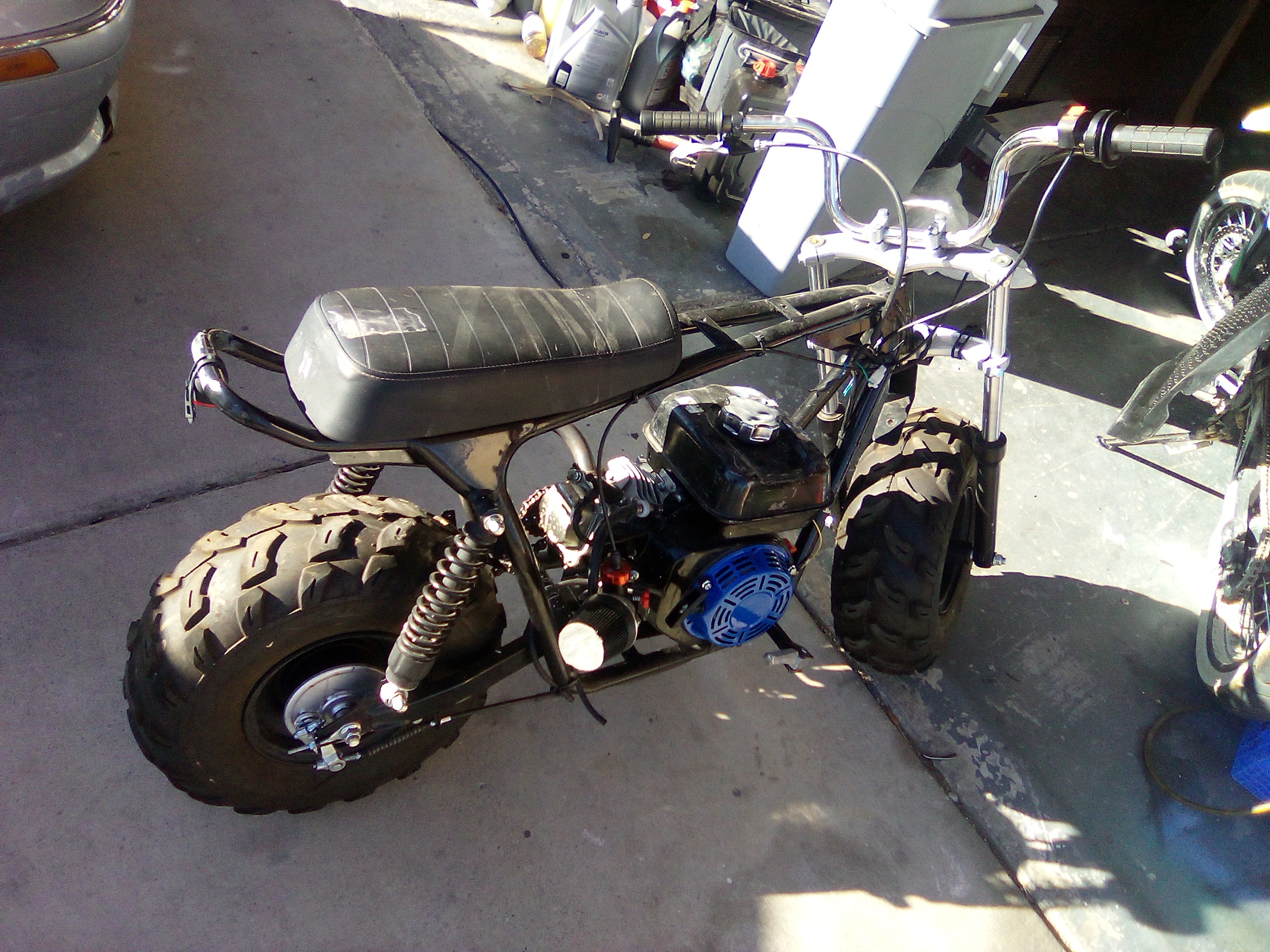
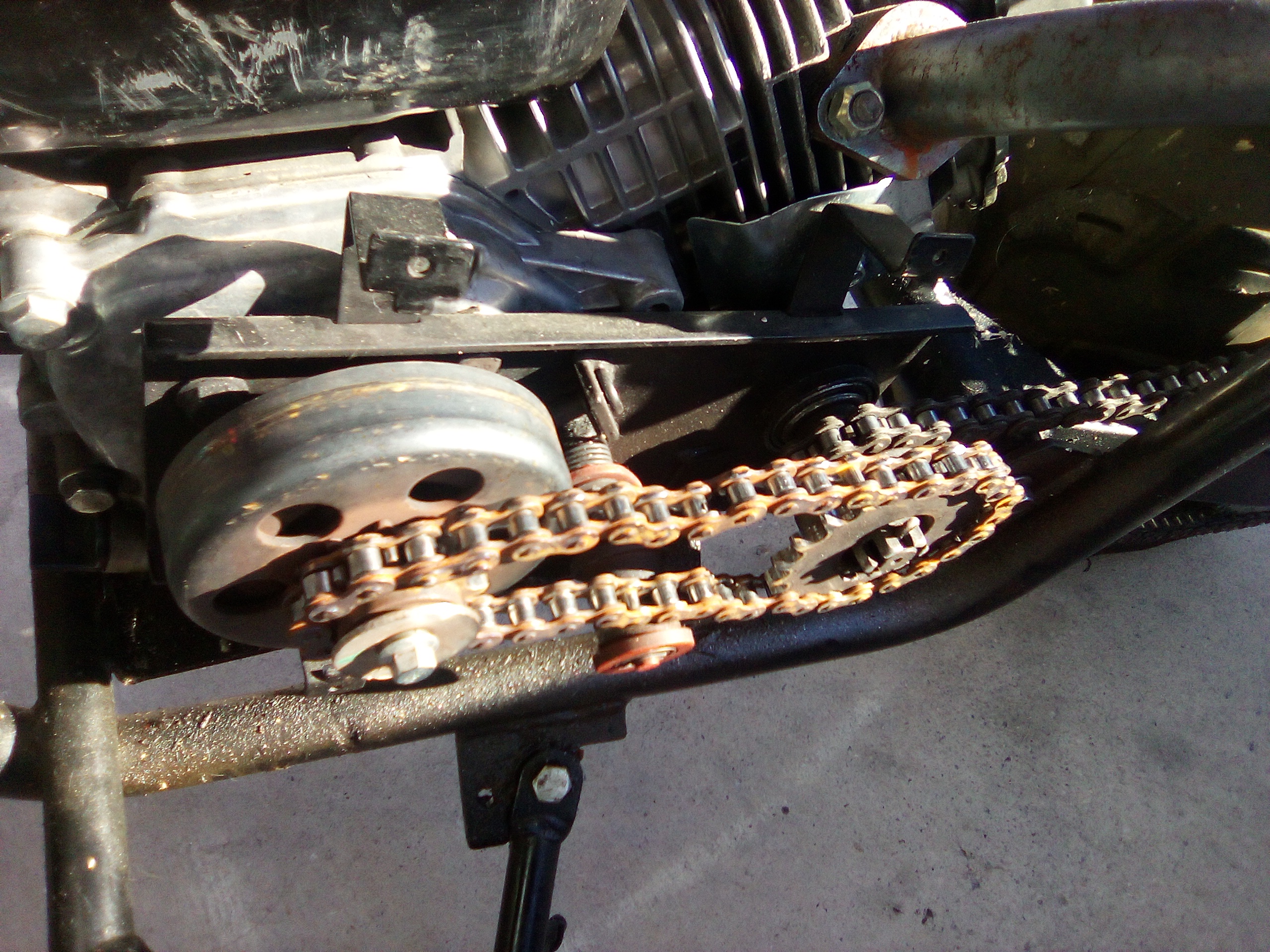
Firstly, i'll remove all the things on the exhaust side of the engine, including the exhaust pipe, both chains, the jackshaft and all of its components and the clutch.
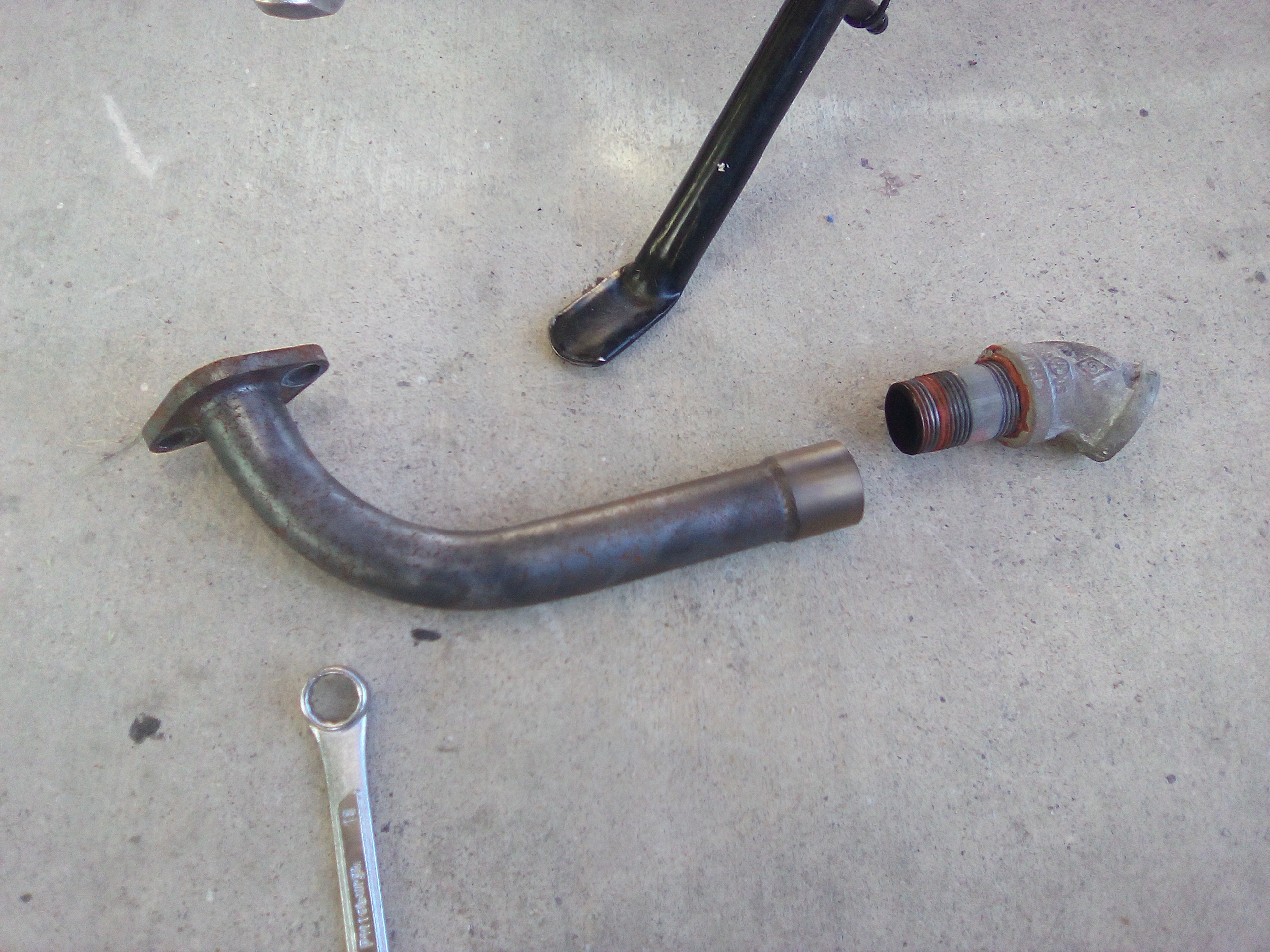
you can see most of these in the photo above, but if you can't tell them apart, dont fret! ill show the parts individually as i remove them. the exhaust will come off first, as it is the simplest to take off - just two 13mm nuts. seen below, the exhaust pipe directs hot exhaust gasses away from the engine and creates back-pressure, which helps the exhaust valve seal. it bolts directly to the cylinder head and is essential to any useful internal combustion engine.
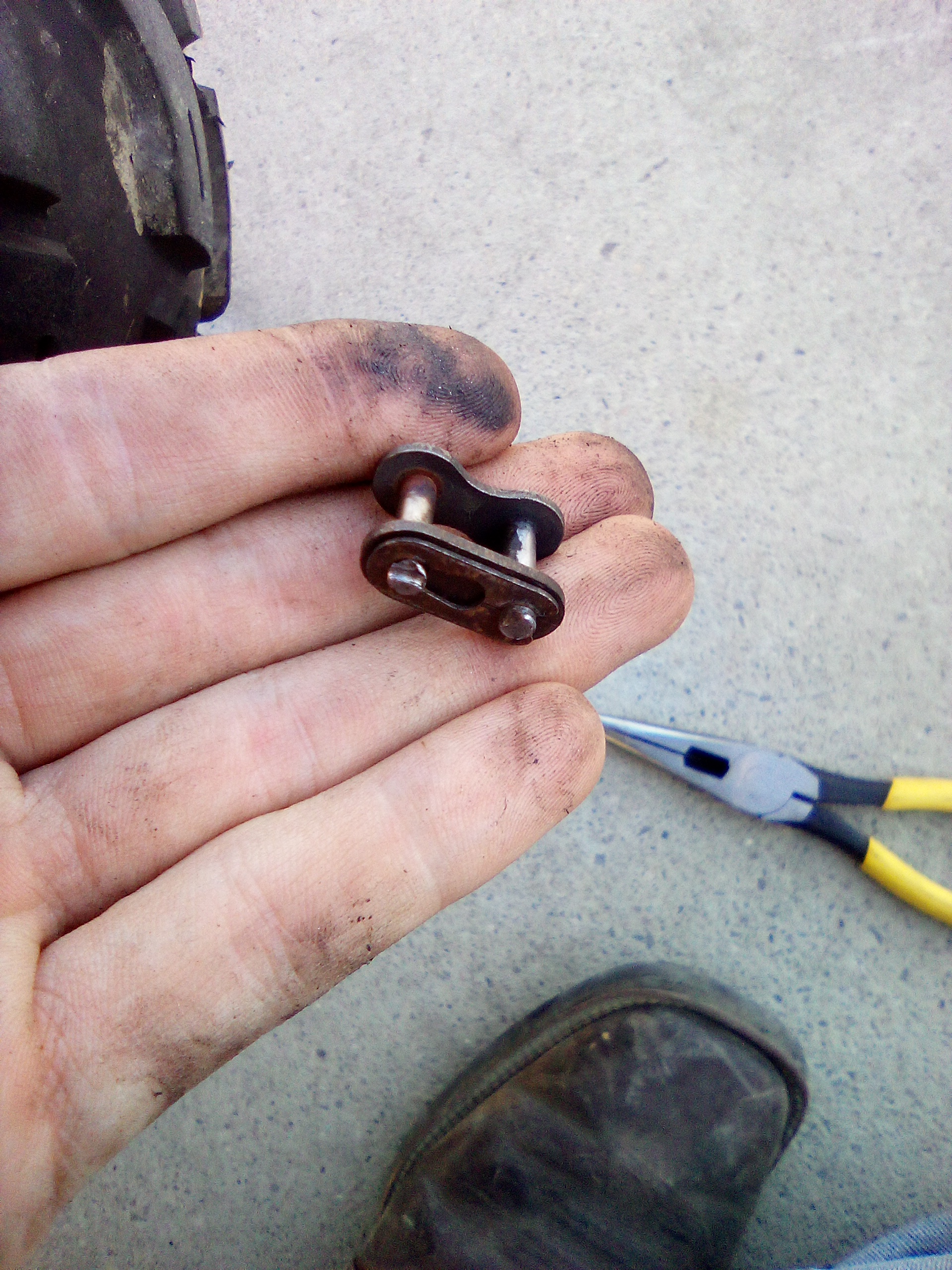
Next up is the chain drive assembly. i'll start with the chain that connects the rear wheel's sprocket to the output sprocket of the jackshaft. first, i must find the master link, the only link in the chain that is designed to come apart. here it is!! i'll need a pair of needlenose pliers to remove it.
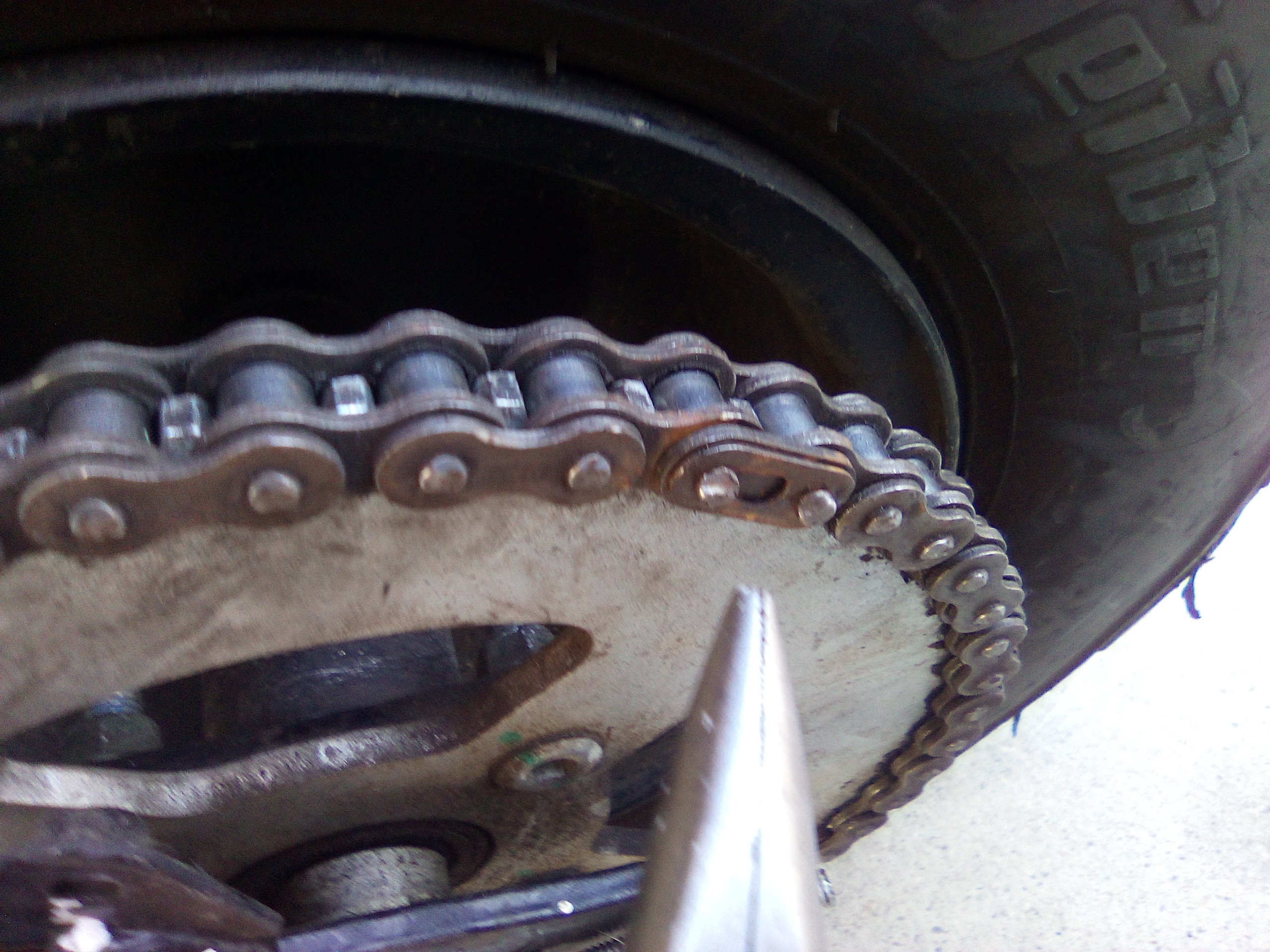
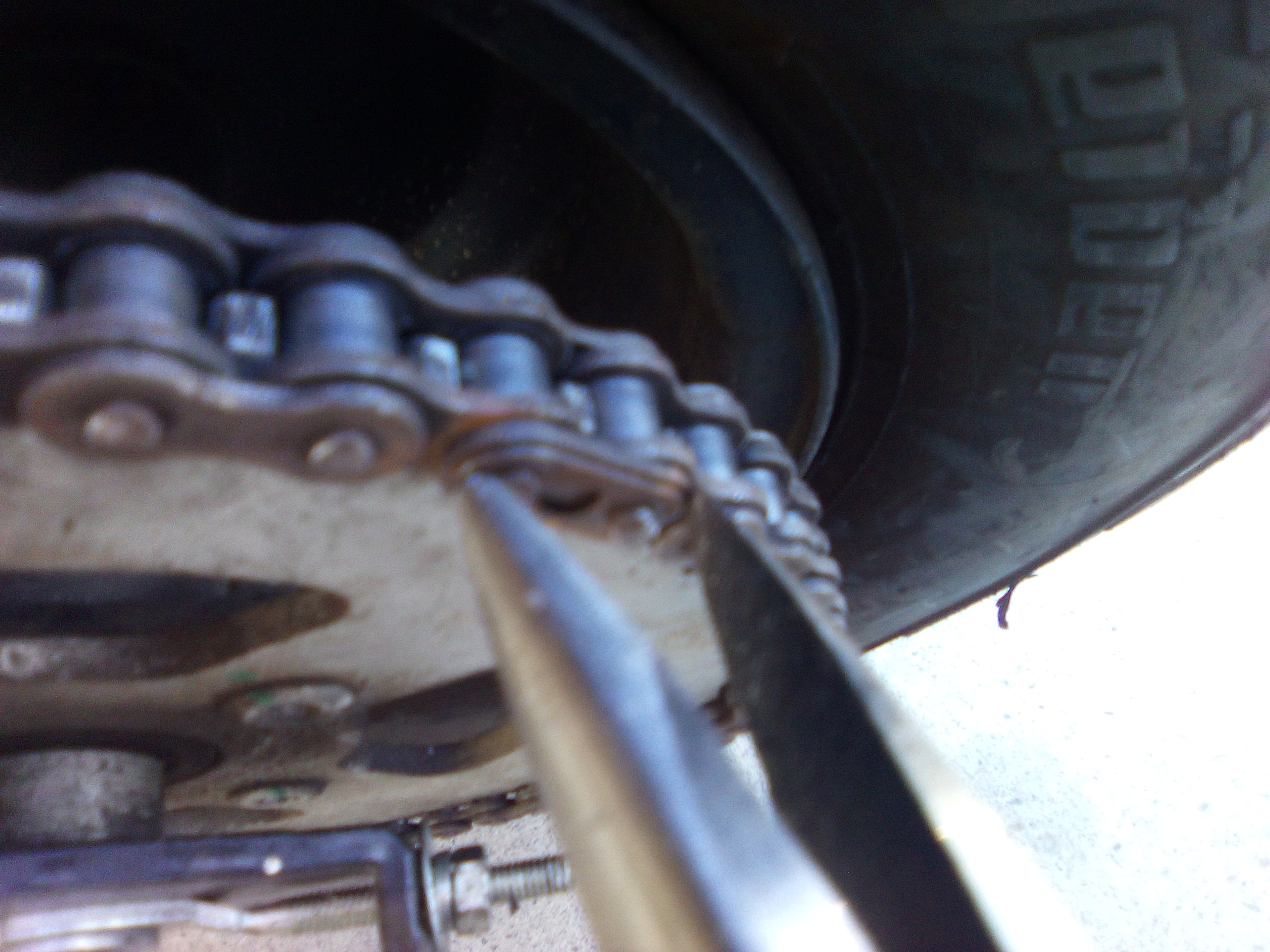
i'll slip them onto the link like so and squeeze the pliers so the retaining clip pops right off.
wow! look at that awesome little piece of machinery!! the wonders of technology...
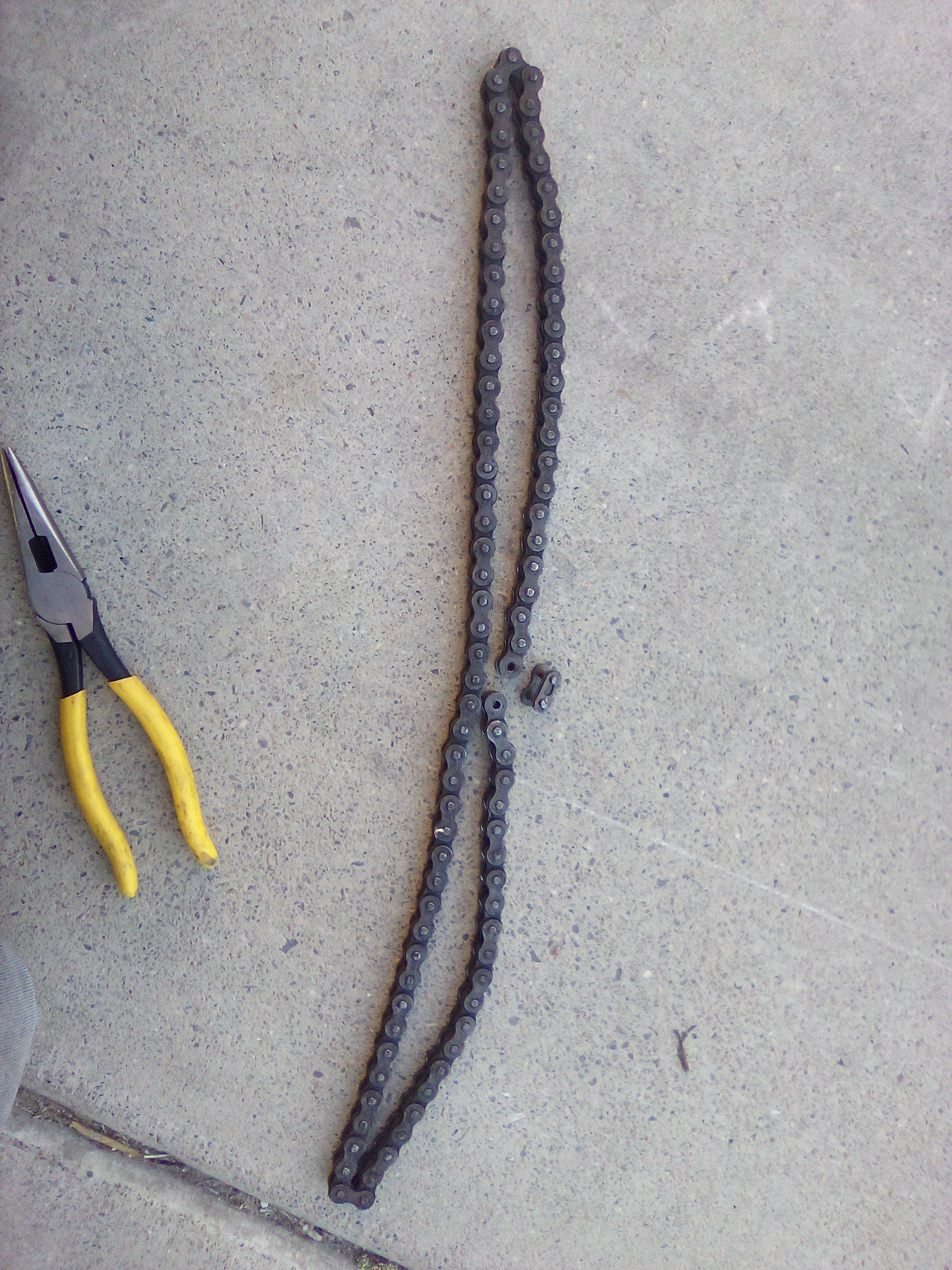
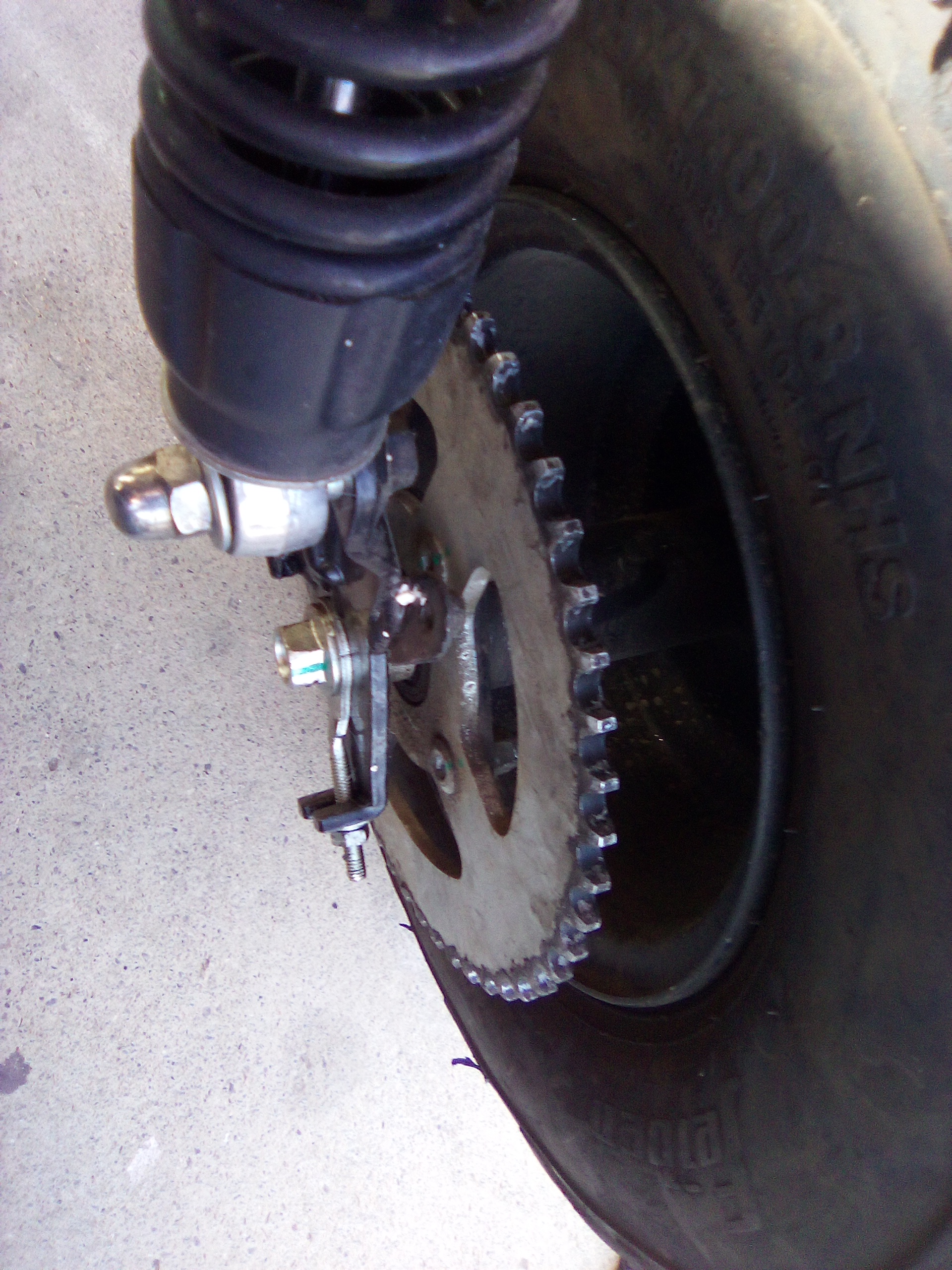
quick note, if you dont know what a sprocket is, its a disc of metal that has teeth in it that the chain grabs onto and transmits power unto. here's a picture of the bare rear sprocket, which has 50 teeth.
anyhow, let's return to the engine, where the jackshaft lies. the jackshaft, pictured below, is kind of a primitive transmission, with 2 different sprockets that sit on the same shaft. the output from the engine turns the clutch, the sprocket of which turns the larger, forward gear on the jackshaft. since the 2 sprockets share a shaft, both turn when one has power unto it. though the rearward sprocket is smaller with less teeth, meaning it turns faster. this rearward sprocket transmits the power being put unto it to the rear sprocket, turning it and the rear wheel. the intended effect of a jackshaft is to increase the effective torque, making the bike accellerate quicker but sacrifices top speed and adds signifigant weight to achieve this. doing away with the jackshaft is what i plan on doing.
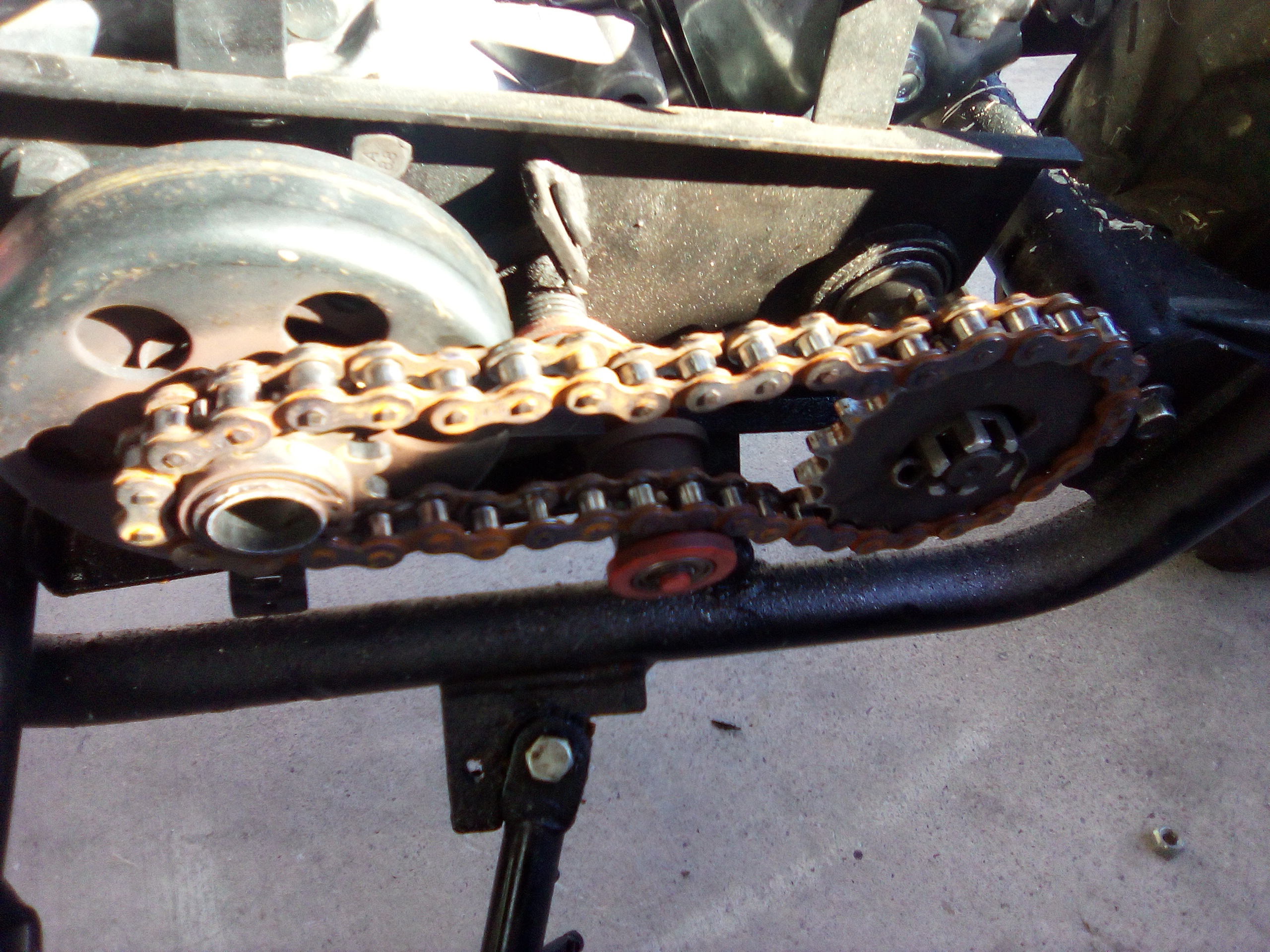
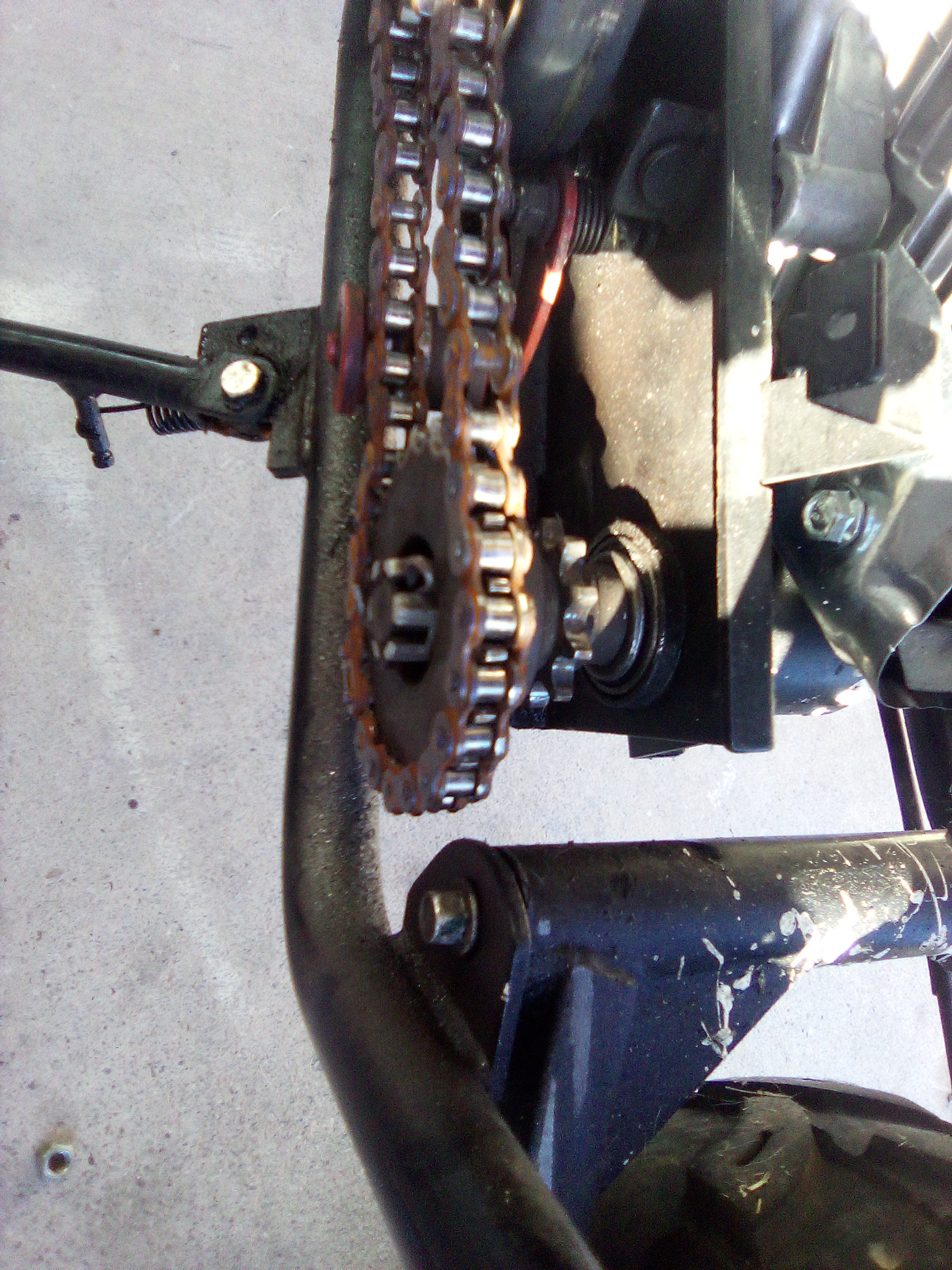
to remove the jackshaft, however, we first must remove all the components that lie on and in front of it. i'll begin by disconnecting the master link that connects the clutch and forward sprocket. though i tried, the rust has seized some if not all of the links, including the master. thankfully, the fastener that held on the clutch, i've already removed, and the fastener of the forward sprocket is easily accessible.
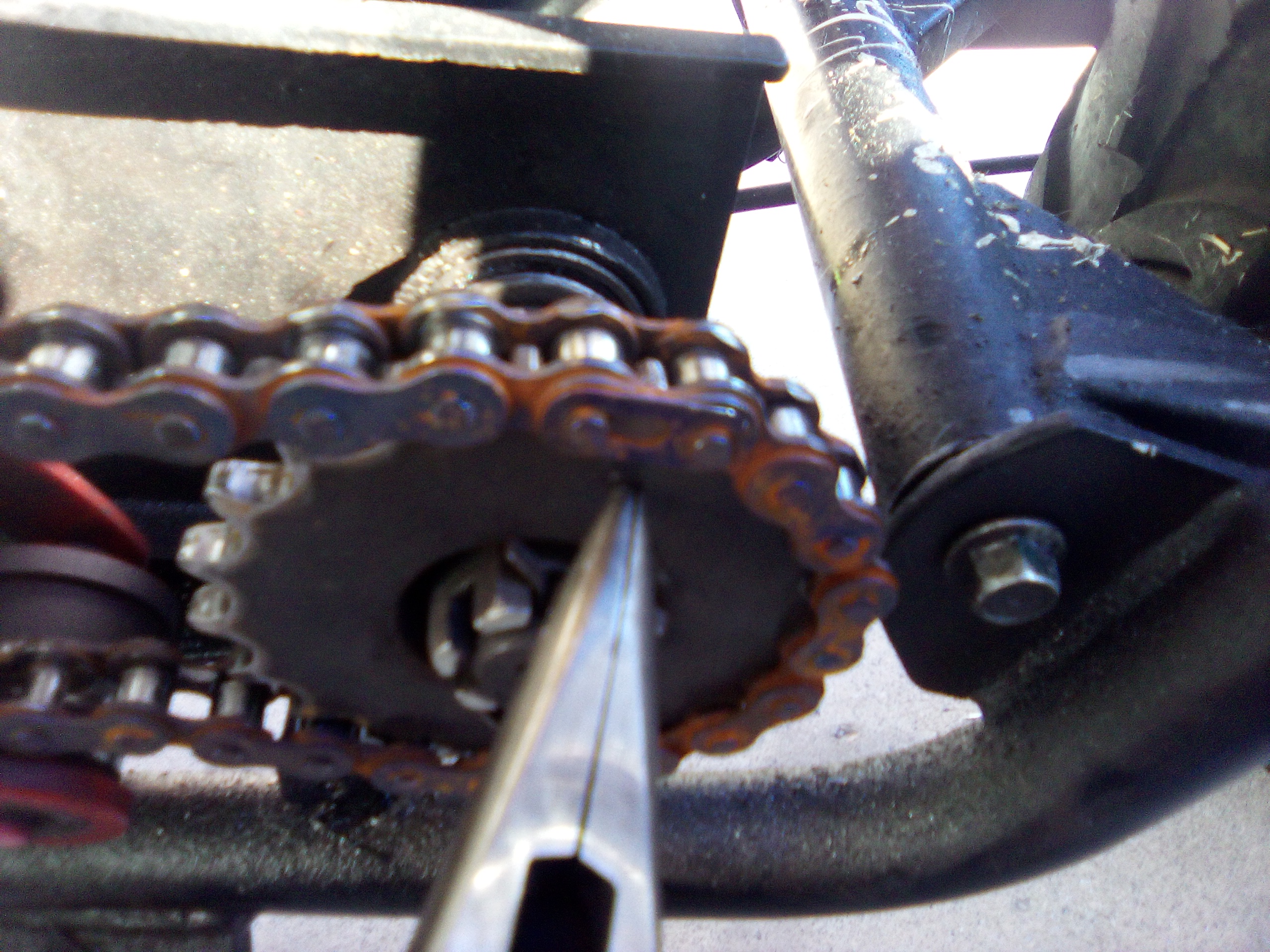
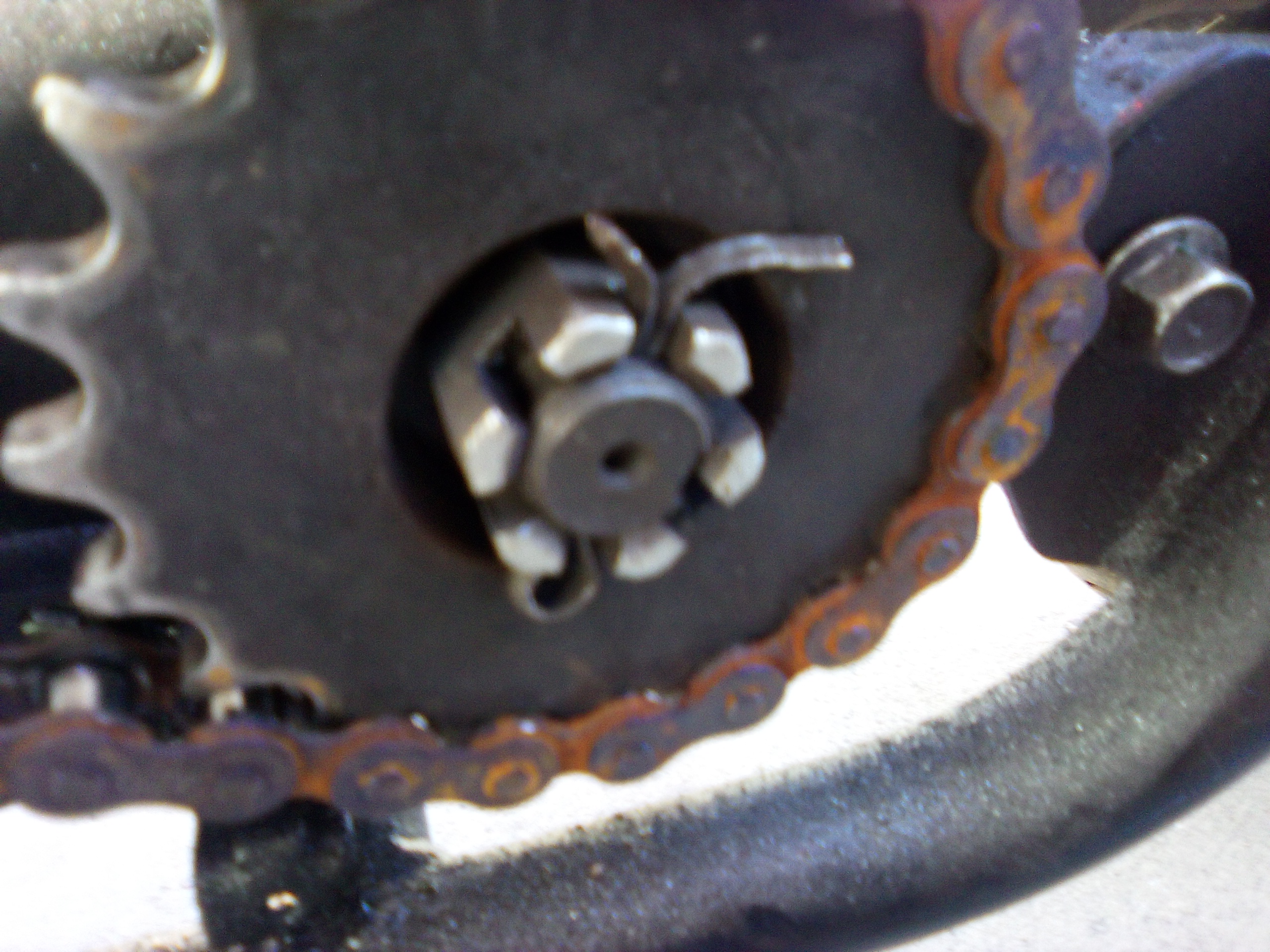
pictured above on the right, is the fastener which holds the sprockets onto the jackshaft. it's a special kind of fastener, called a castle nut. the stud which the nut threads onto has a hole in it, where a cotter pin is placed and its ends bent around the nut to secure it. to remove it, i bend the cotter pin back to its former shape and pull it out with pliers. then i loosen the nut just as i would any other. after i remove the nut, both gears, the clutch, and the chain that mates them together all slide right off. the final part that isnt the jackshaft itsself is the chain tensioner, seen below. it pushes the chain upward to ensure it doesnt slip off of either sprocket during operation.
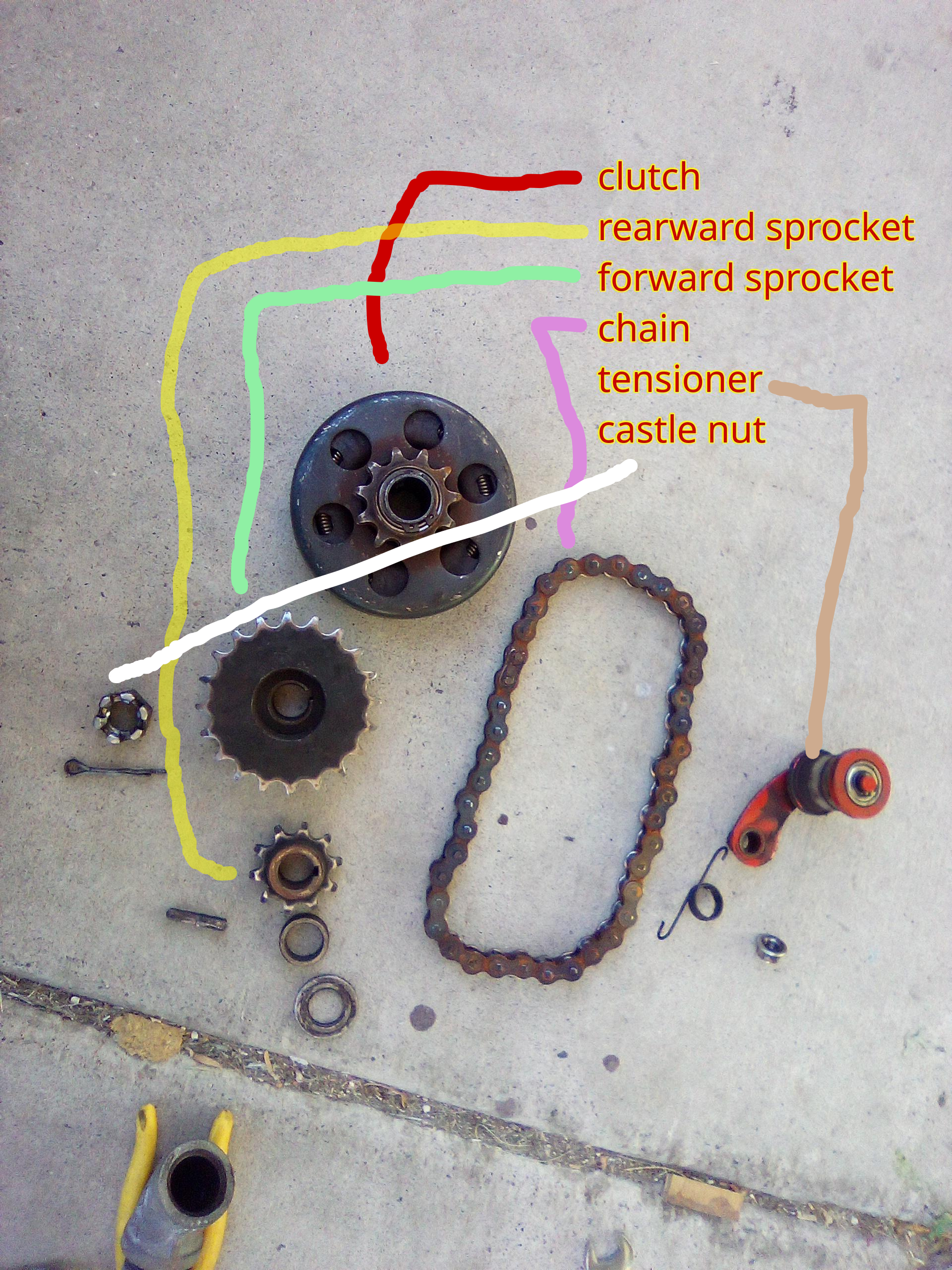
oh yeah, i almost forgot about the clutch! seen above, this particular kind of clutch is called a centrifugal clutch. instead of relying on the operator to engage and disengage the clutch like on most motorcycles, minibikes use centrifugal clutches which are effectively automatic. and since there is only one gear, no need to worry about operating the clutch to switch gears. when the engine is idling, only the inner part of the clutch moves. when given throttle, the engine speeds up and the inner part of the clutch expands outward. it only expands when the engine reaches a certain speed, to prevent stalling. the inner part has a special lining, kind of like brake pad material, on the parts that contact the outer clutch. when contact happens between the inner and outer clutch, they grab each other and move as one solid piece, and since the clutch's sprocket is on the outer clutch, this causes the bike to move!
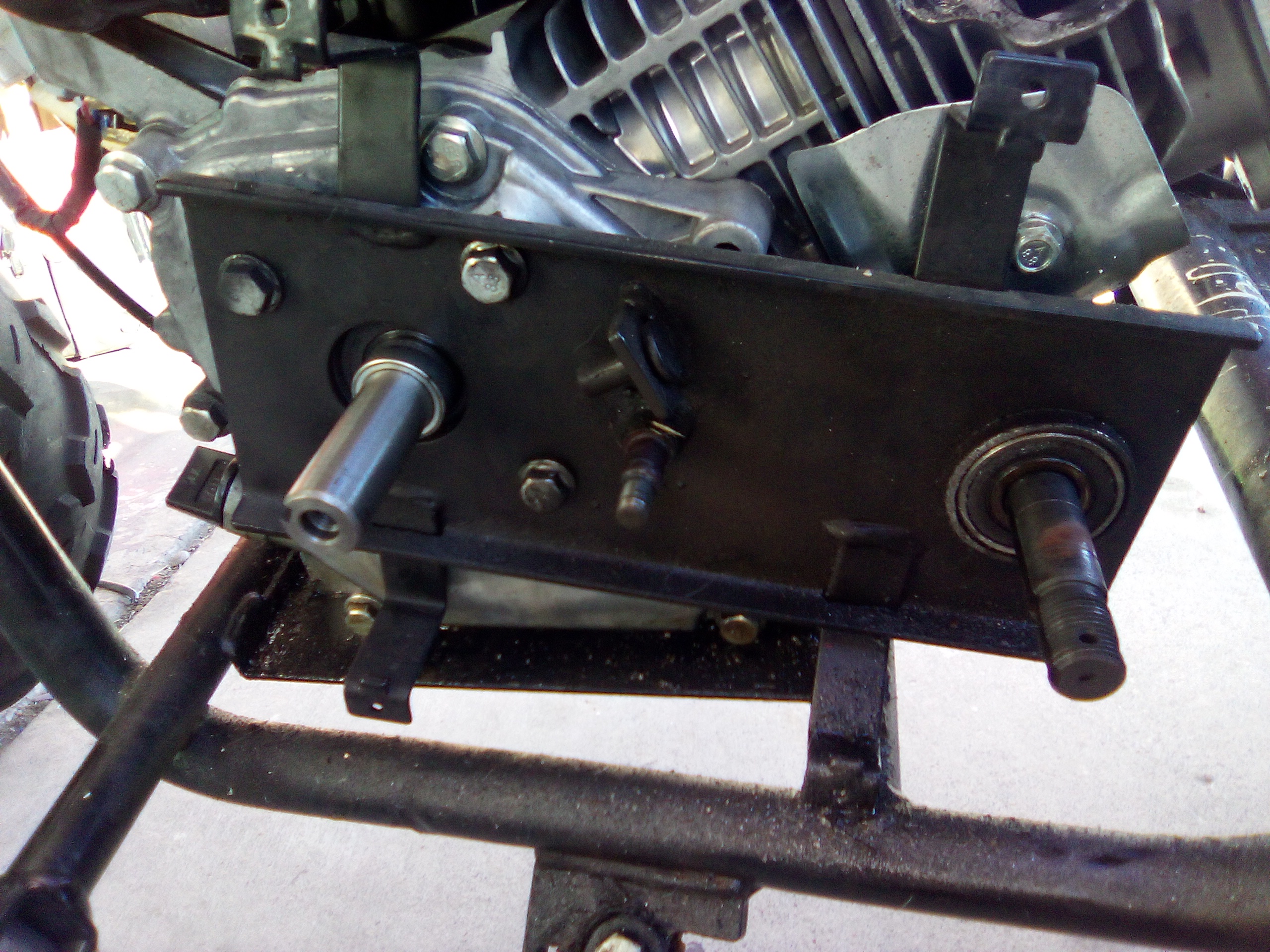
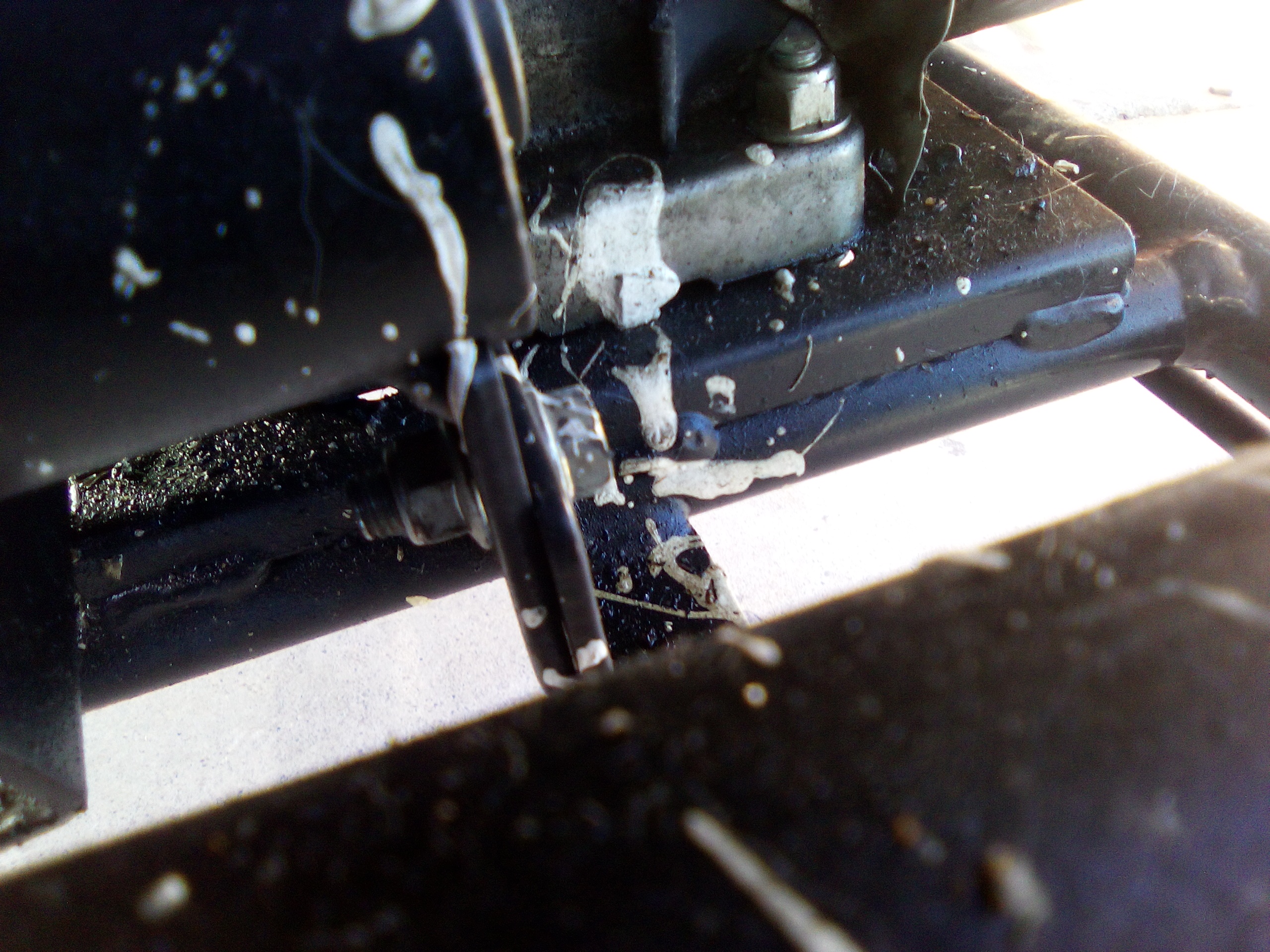
okay, now onto the jackshaft assembly itsself. ill have to remove the four bolts that thread into the engine, as well as a bolt and nut that secure the jackshaft to the frame. after this, i'll be completely done with taking stuff off of the exhaust side.
now on the opposite side, i'll begin removing the gas tank and the carburetor.
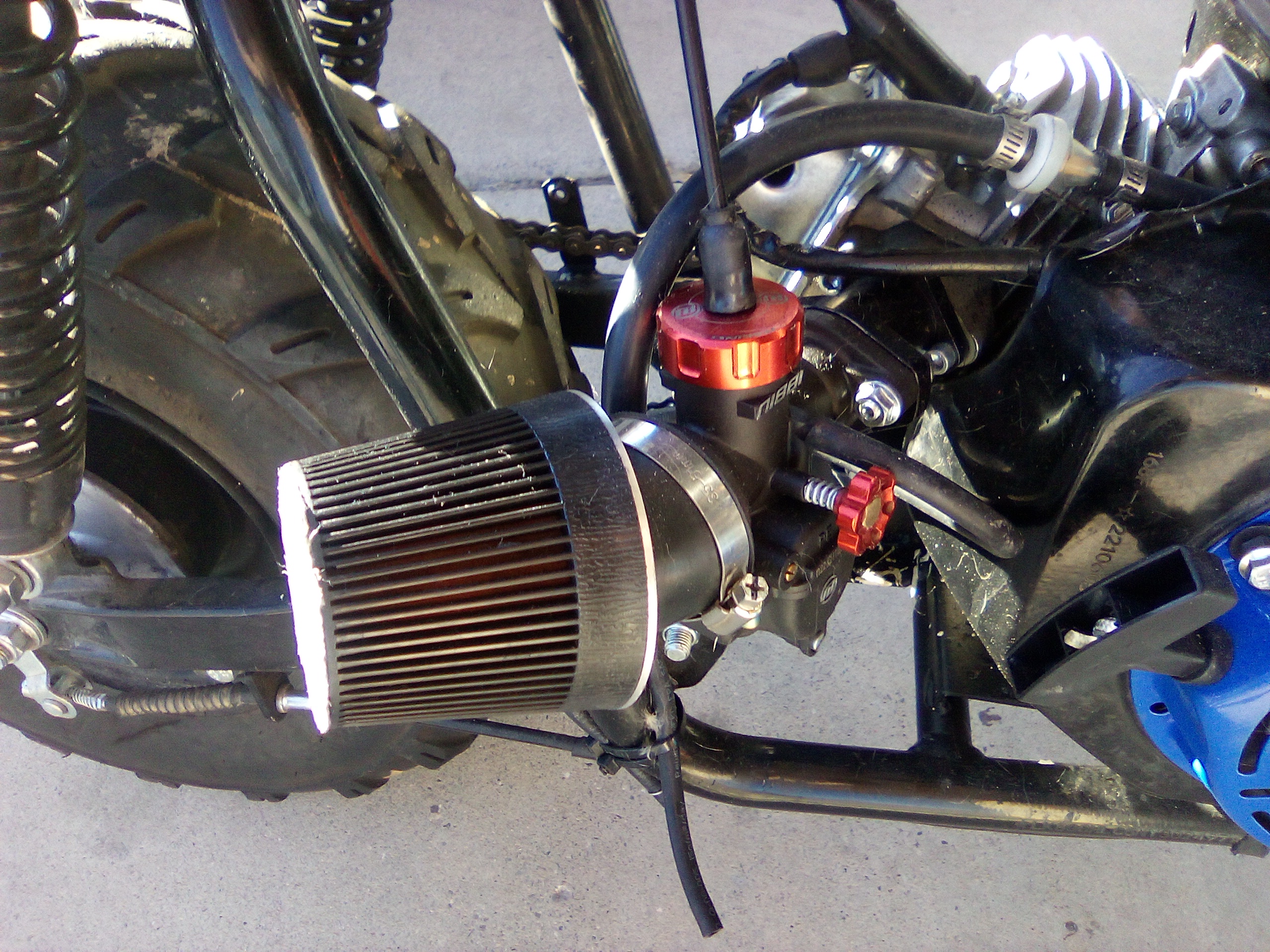
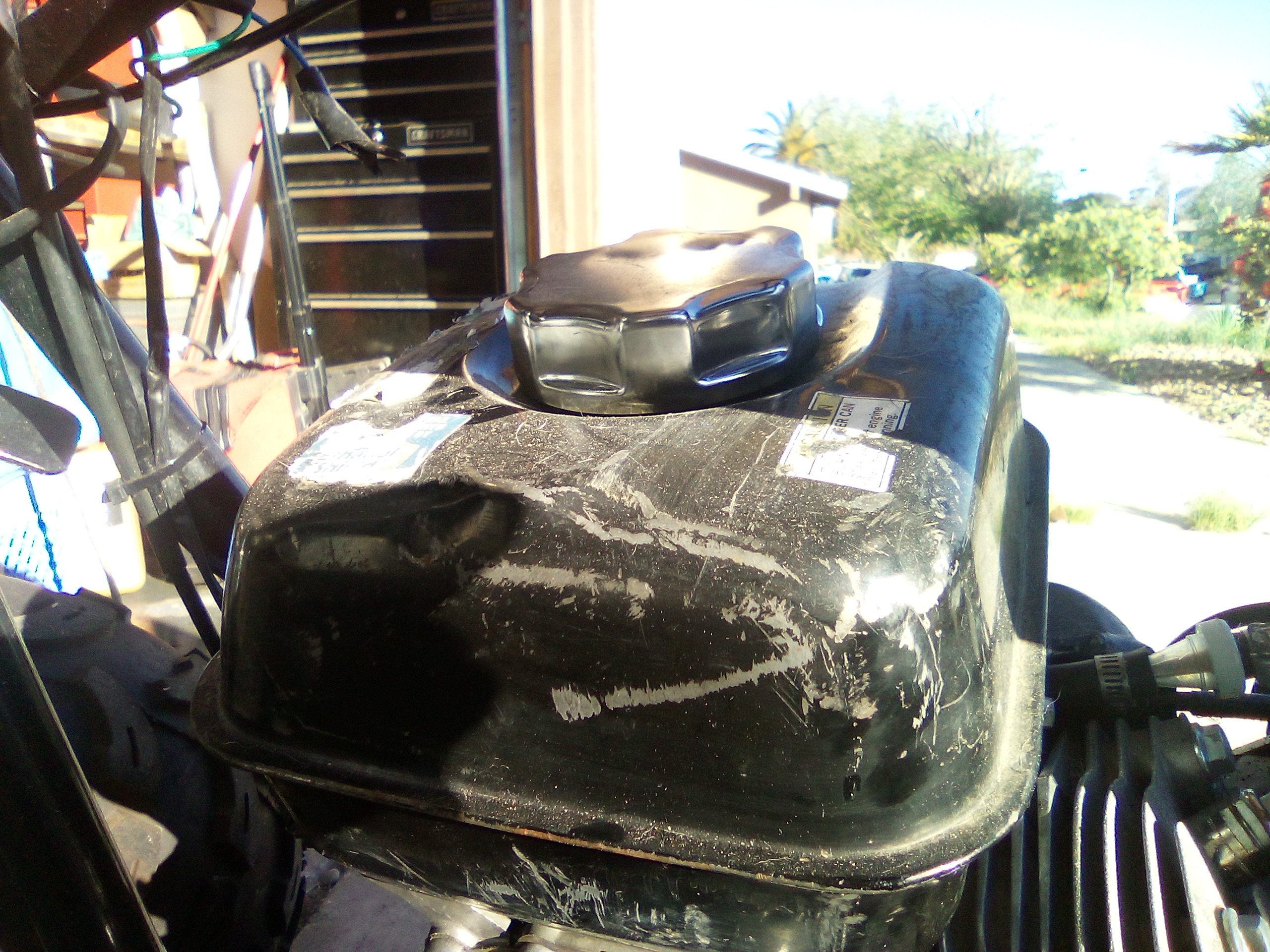
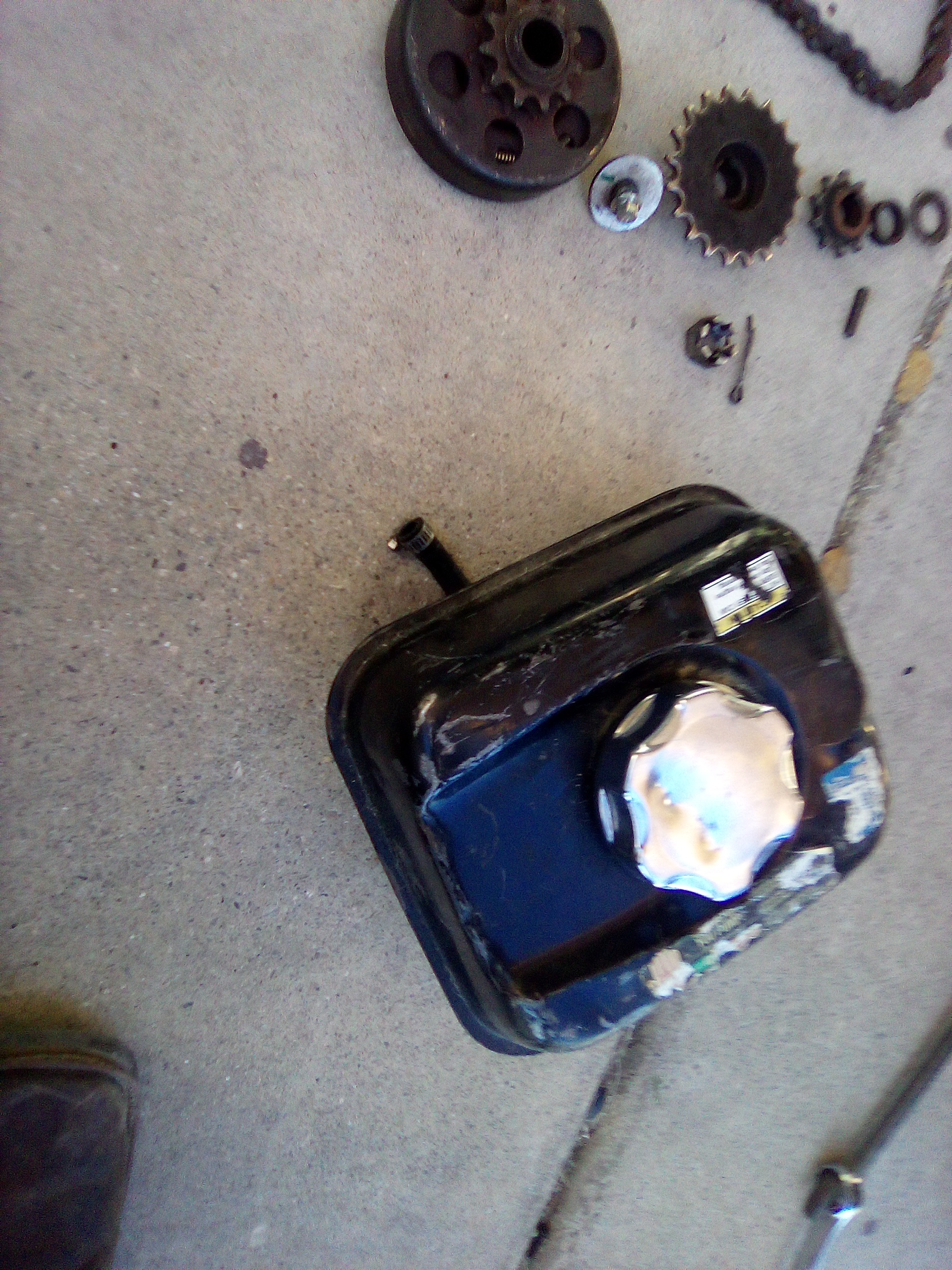
ill take the tank off first. unhook fuel hose at fuel filter, then remove some hardware. there's one bolt near the head and 2 nuts on the opposite side. then the tank lifts right off!! and here it is, all by its lonesome.
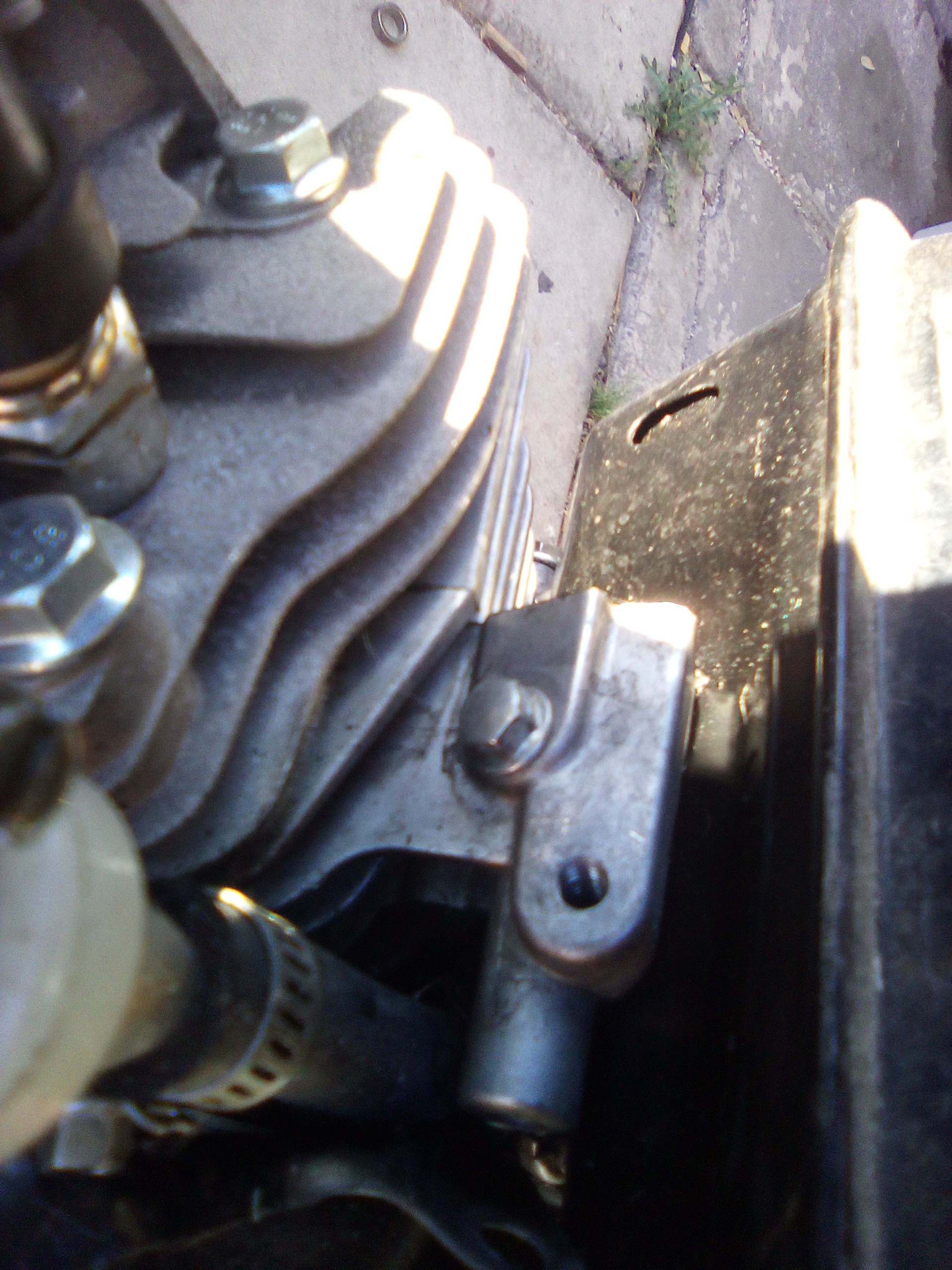
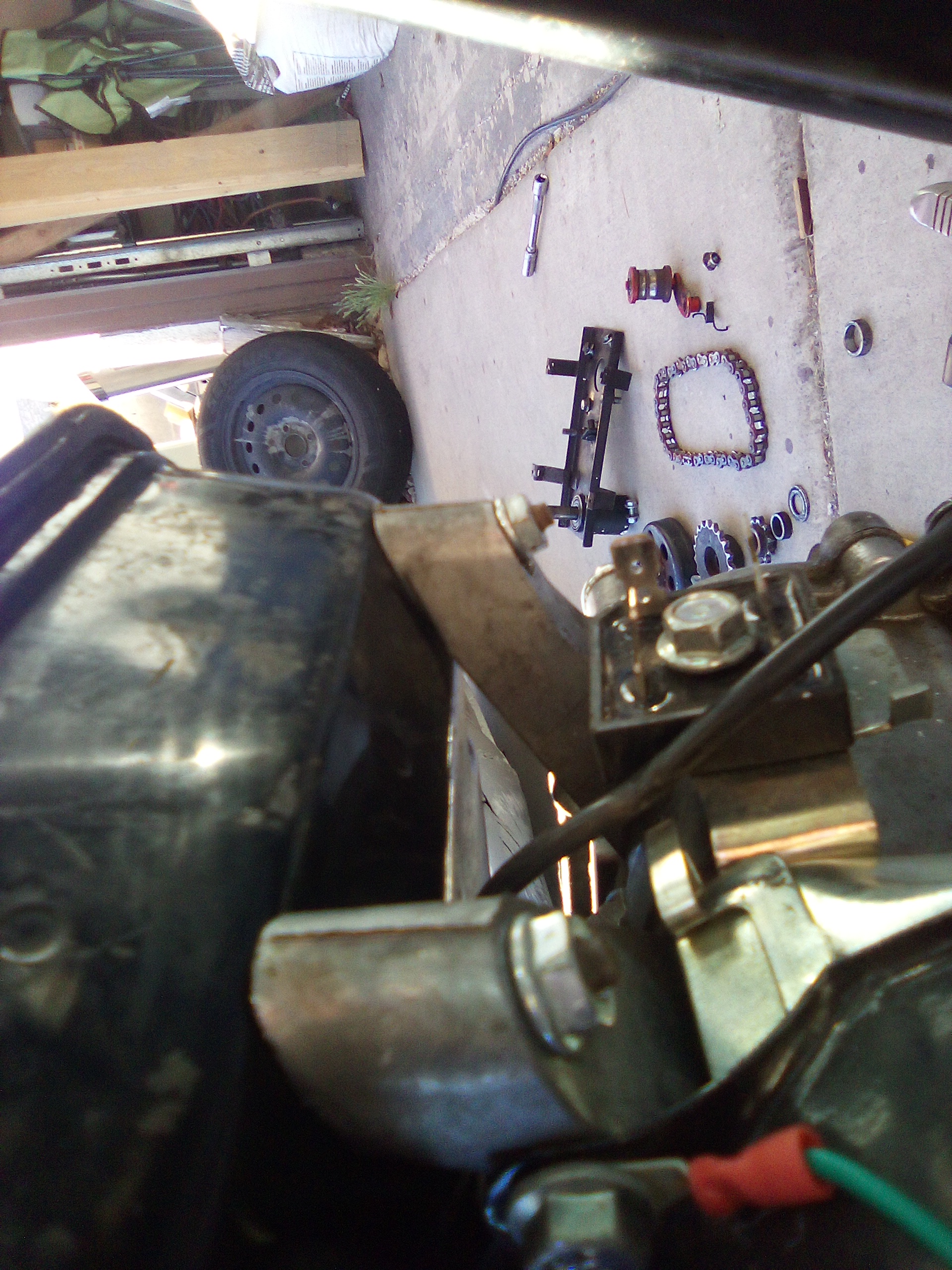
now onto the carburetor, which is a bit more involved because of the throttle linkage and all the hoses and such. to begin, ill disconnect the incoming fuel hose, seen on the left, and also the drainage hoses. after this short endeavor, work begins on disconnecting the throttle linkage.
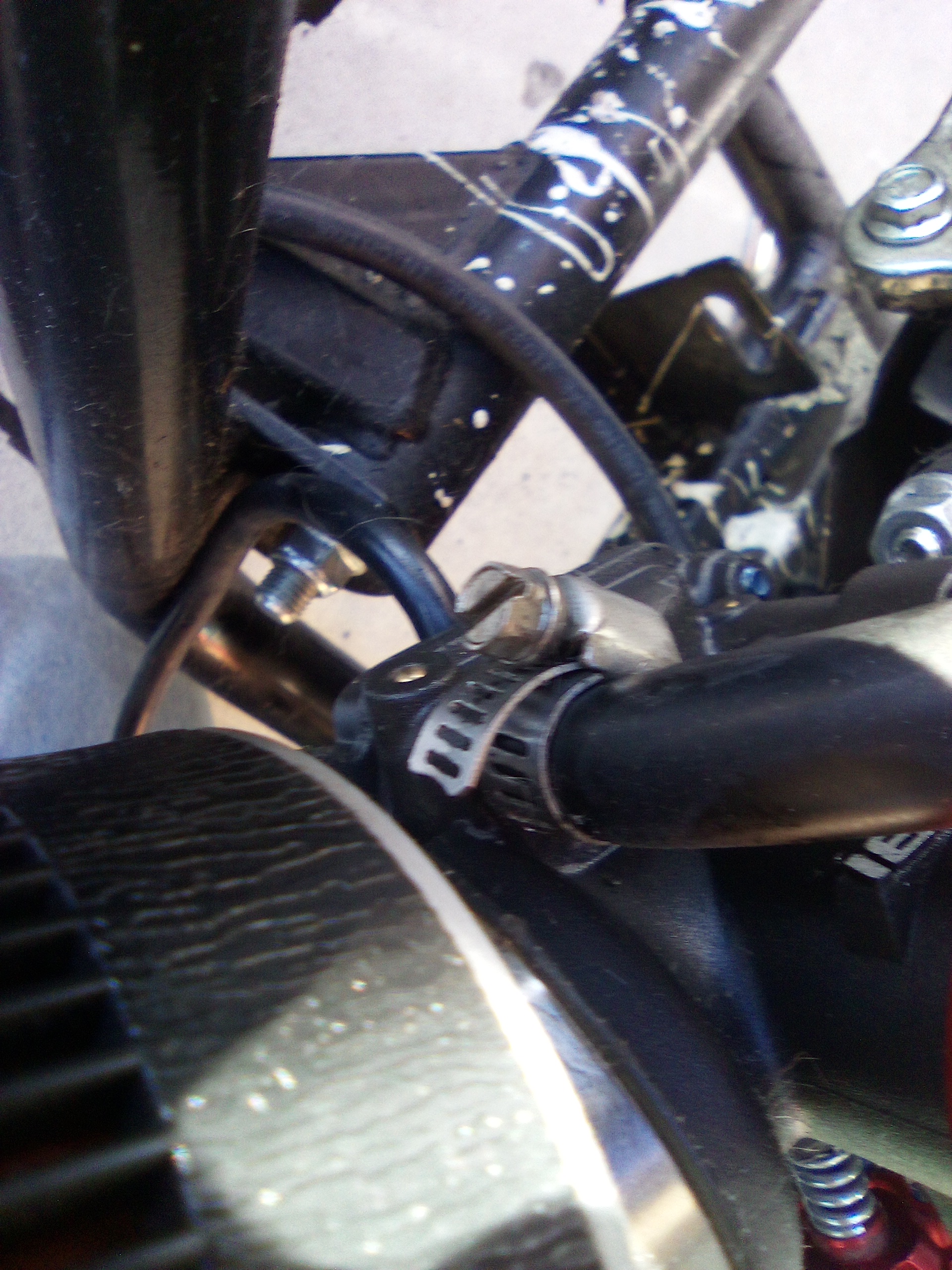
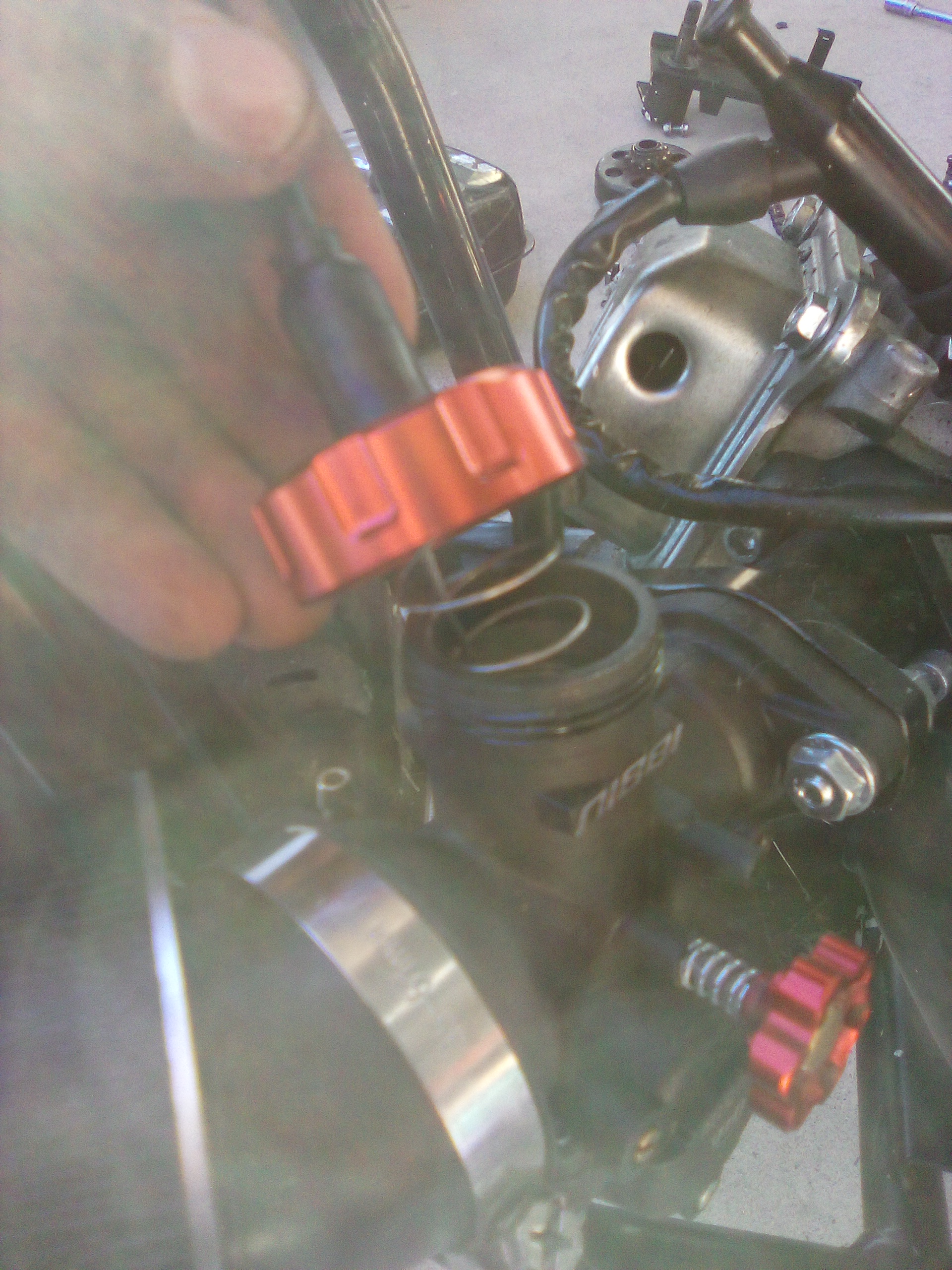
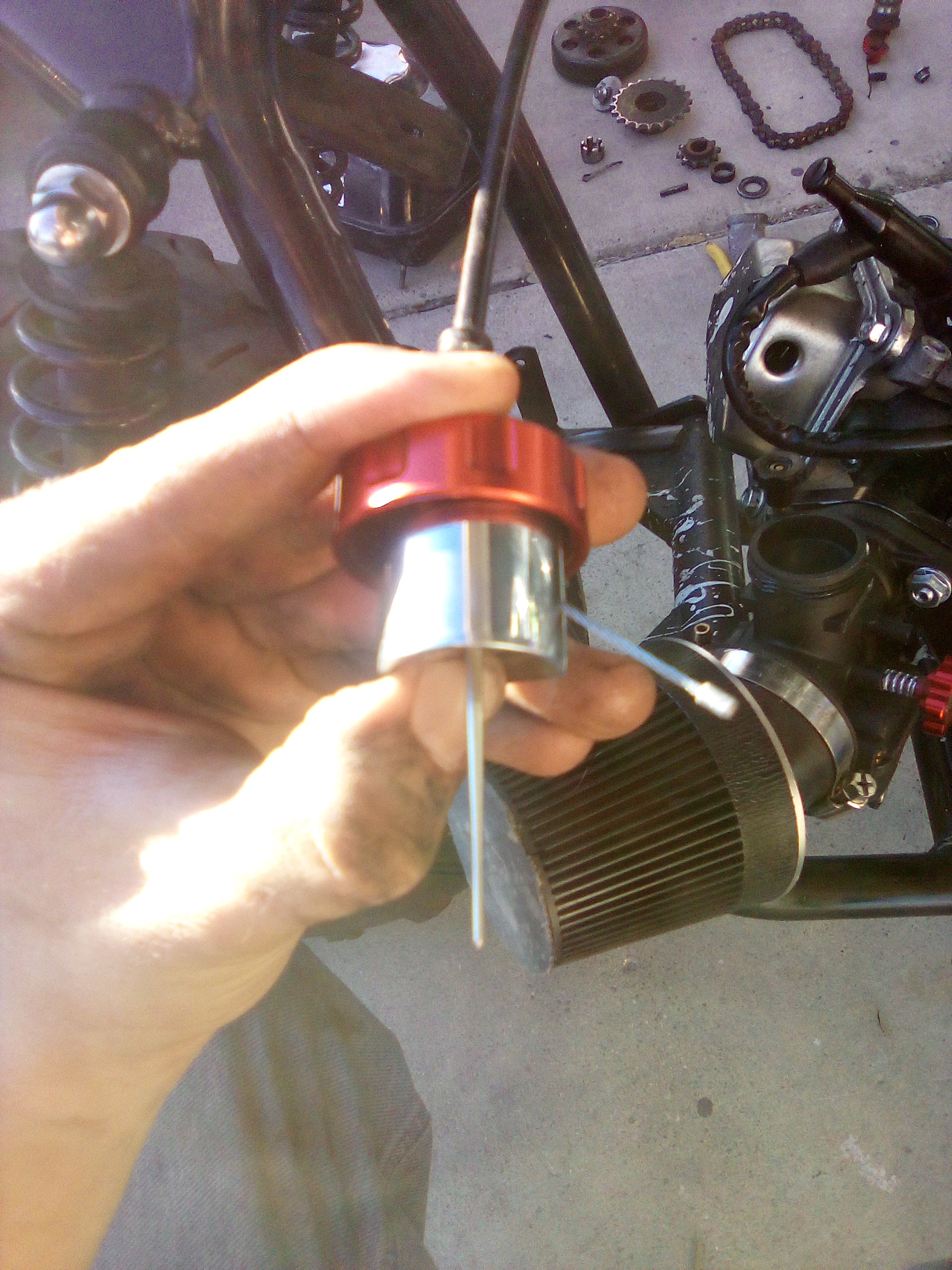
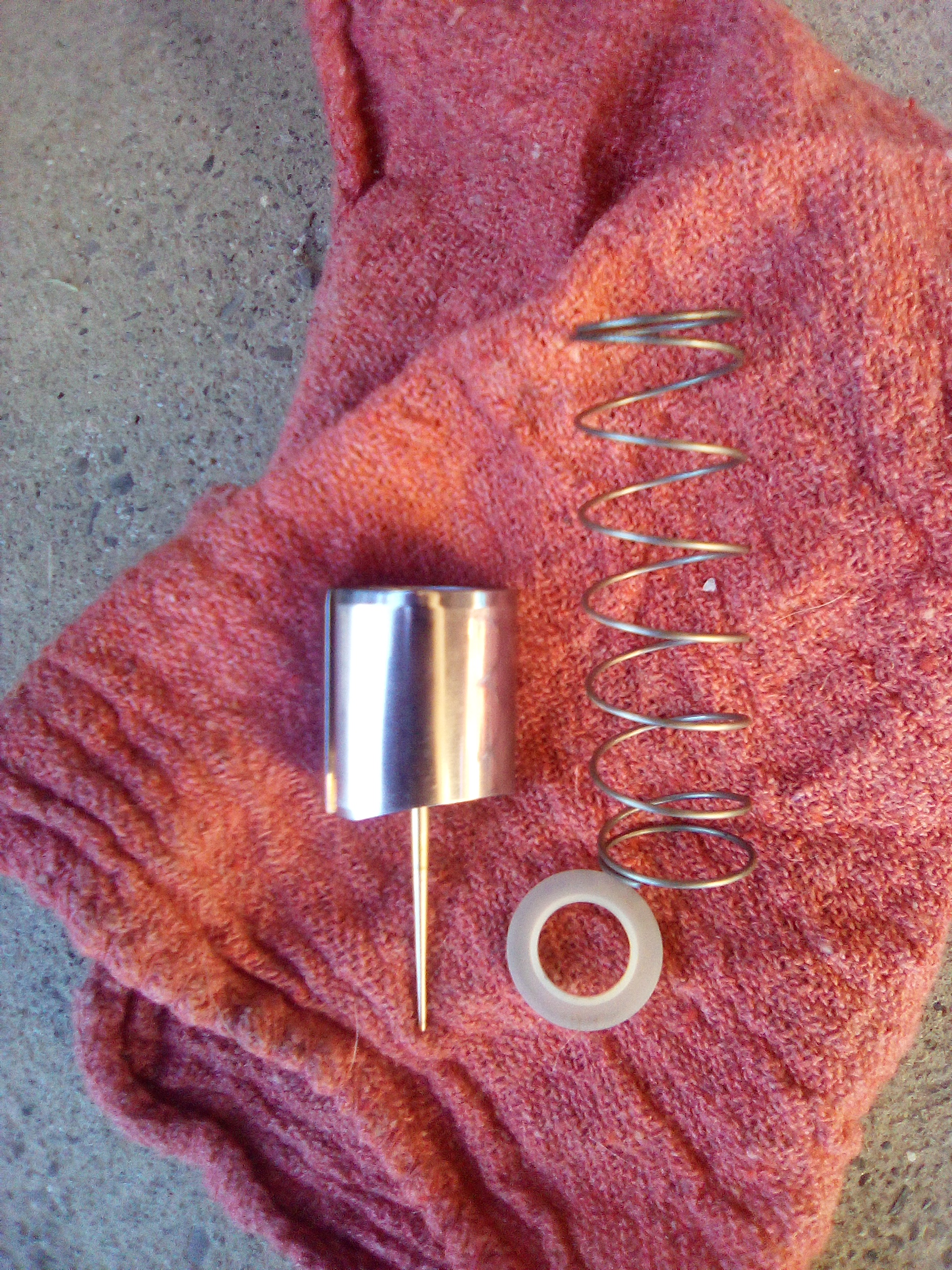
first, i'll unscrew the cap that threads onto the carburetor. then i'll pull out the slide, being careful not to damage the needle. the needle controls the fuel that goes into the engine.
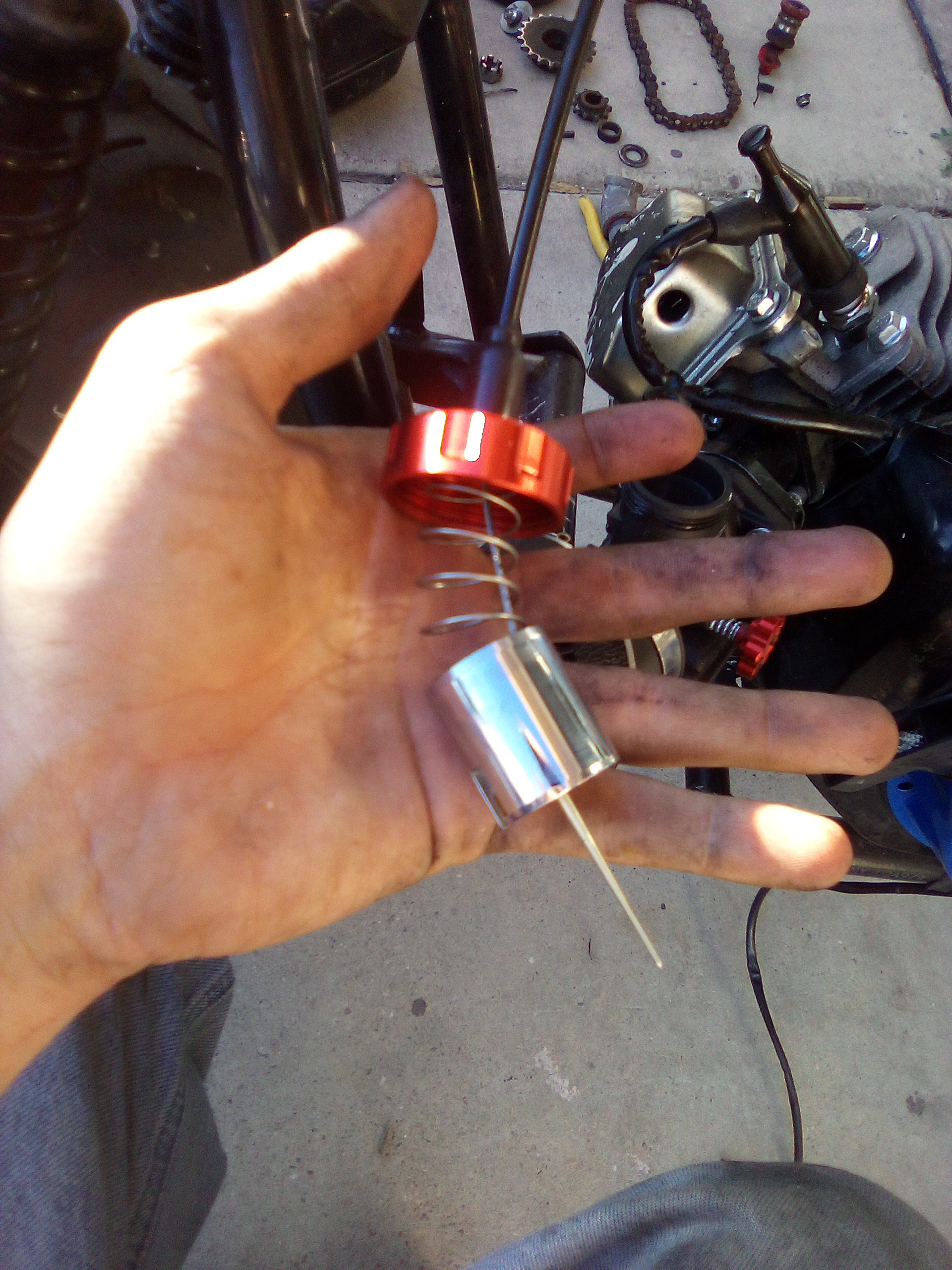
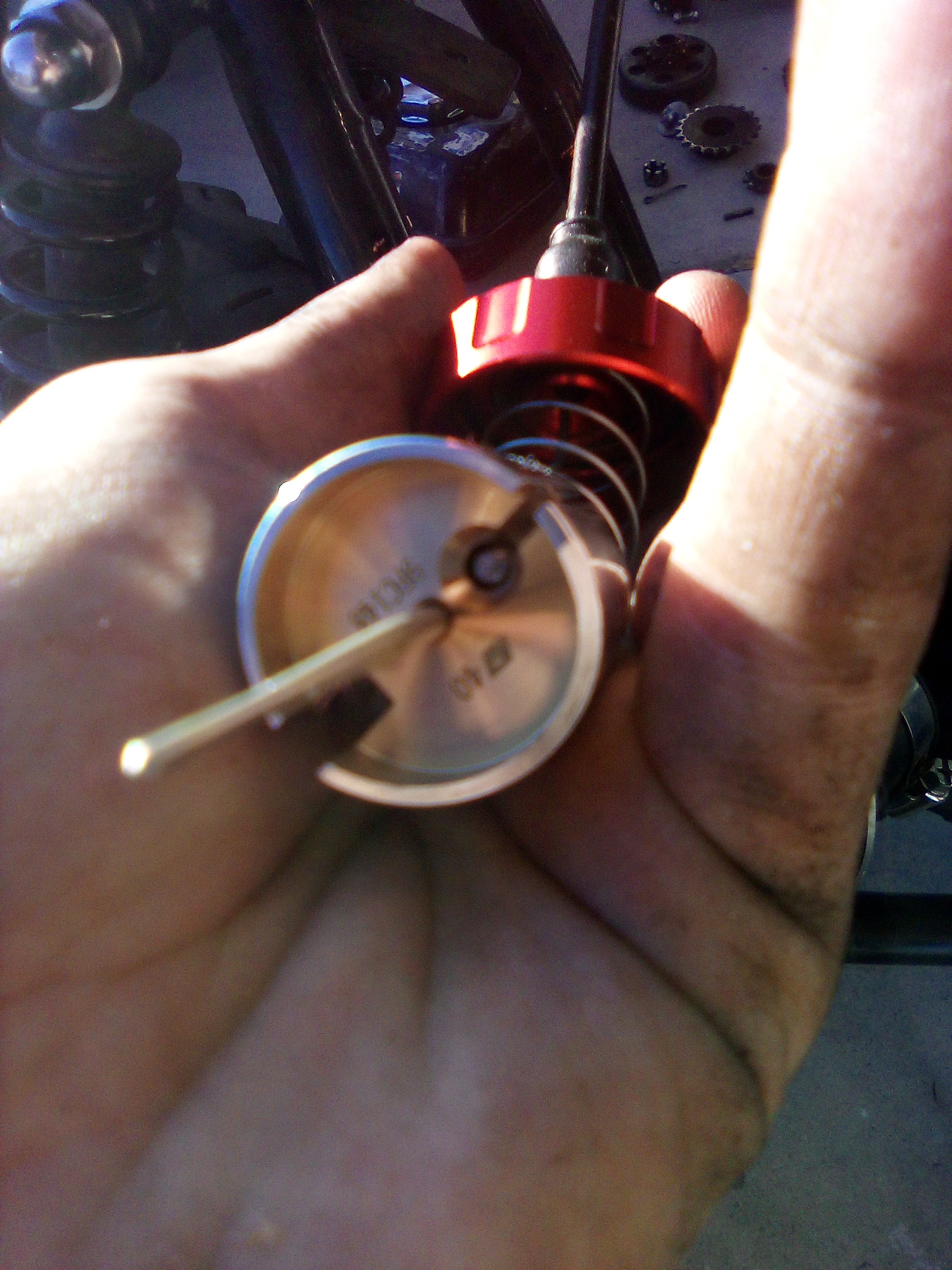
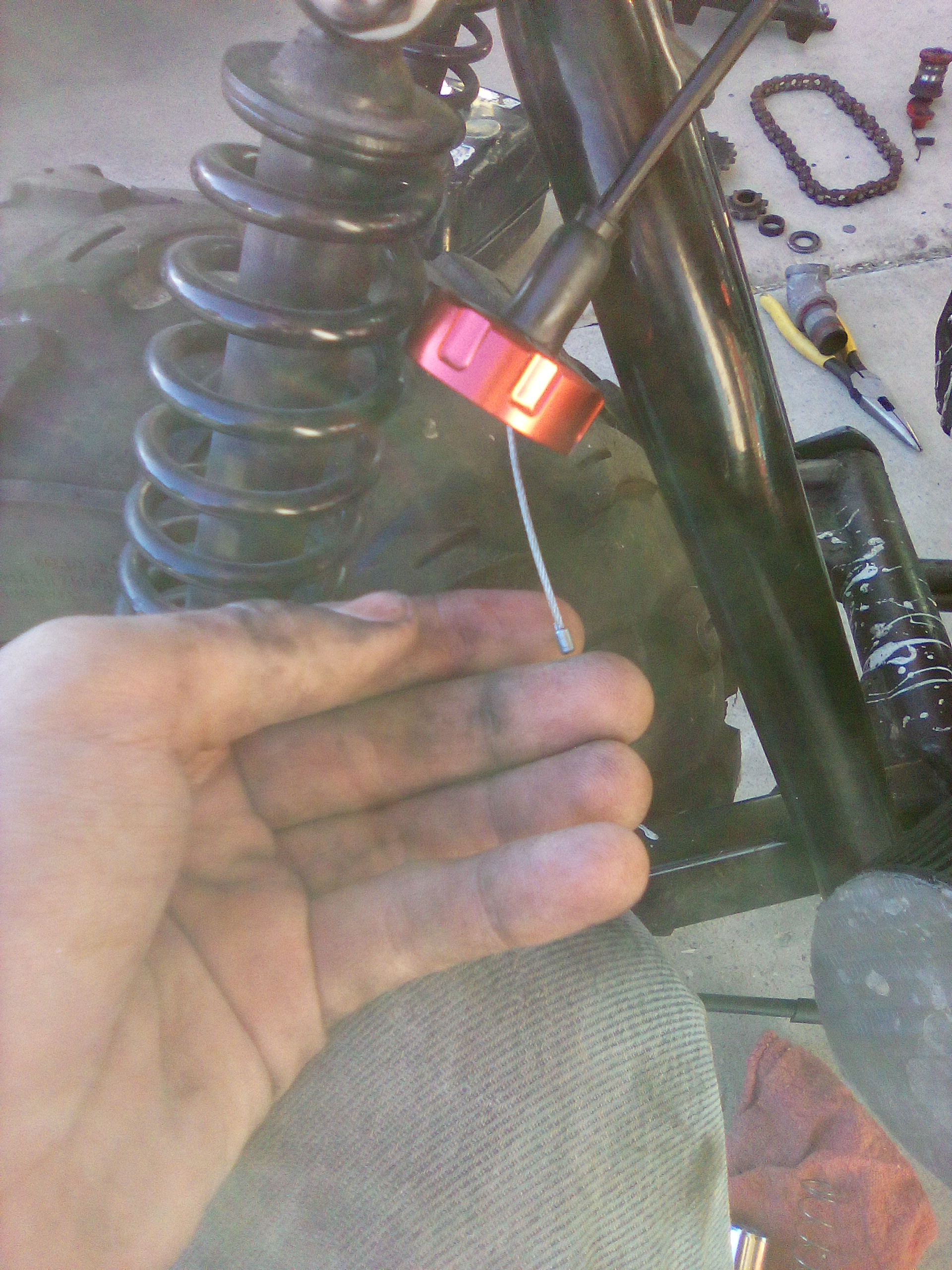
after this, i must move the end of the throttle cable out from the hole on the bottom of the slide, seen in the photo above right. to do this, i compress the spring that is inbetween the cap and slide, and pull the cable to the valley in the slide. the slide, needle and spring are now disconnected and may be placed aside. the cap is affixed to the throttle cable with a rubber grommet.
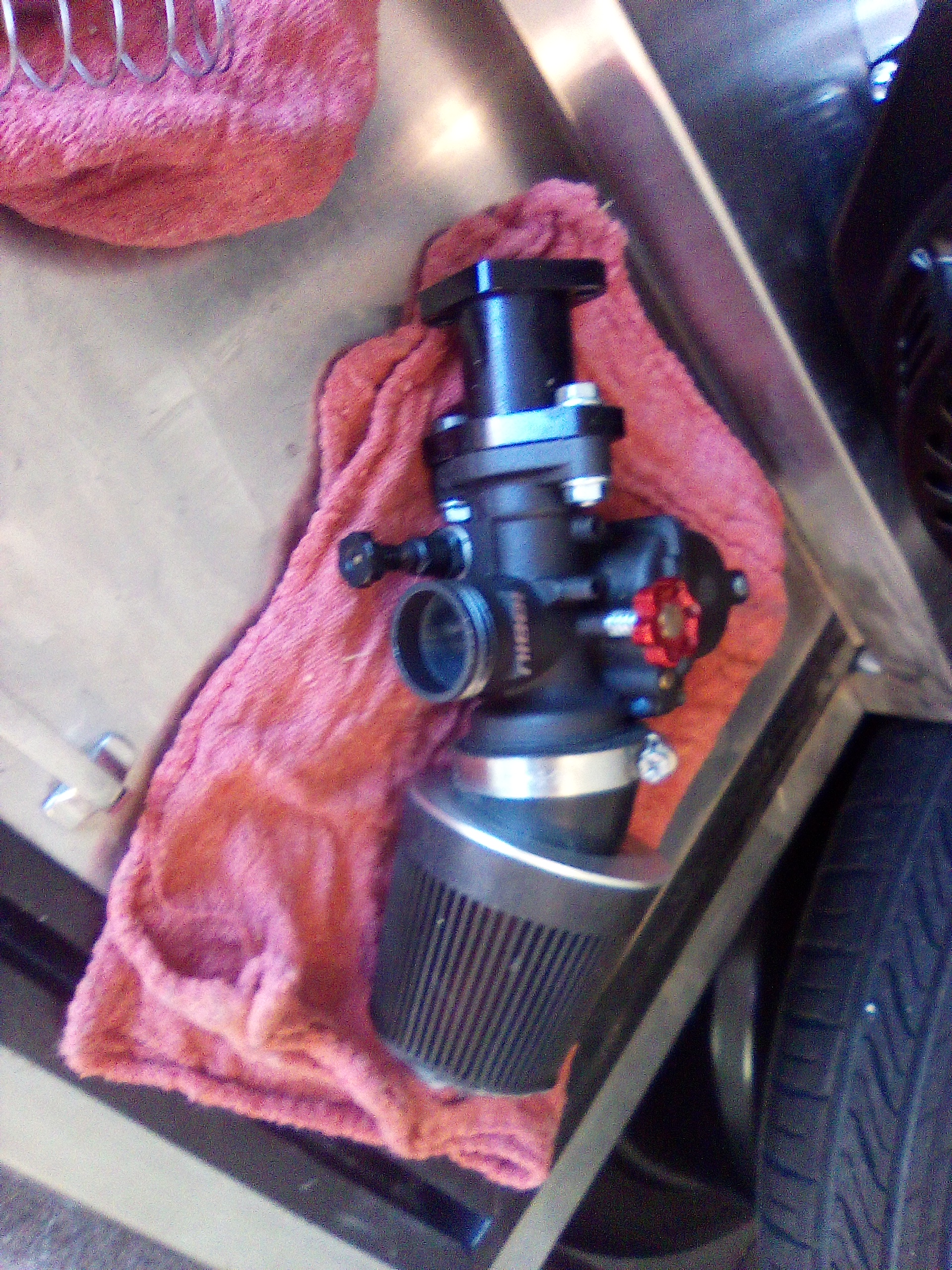
now everything attached to the bike is disconnected from the carb. the only thing left is the two bolts holding it to the engine. once the bolts are removed, the carb can be removed.
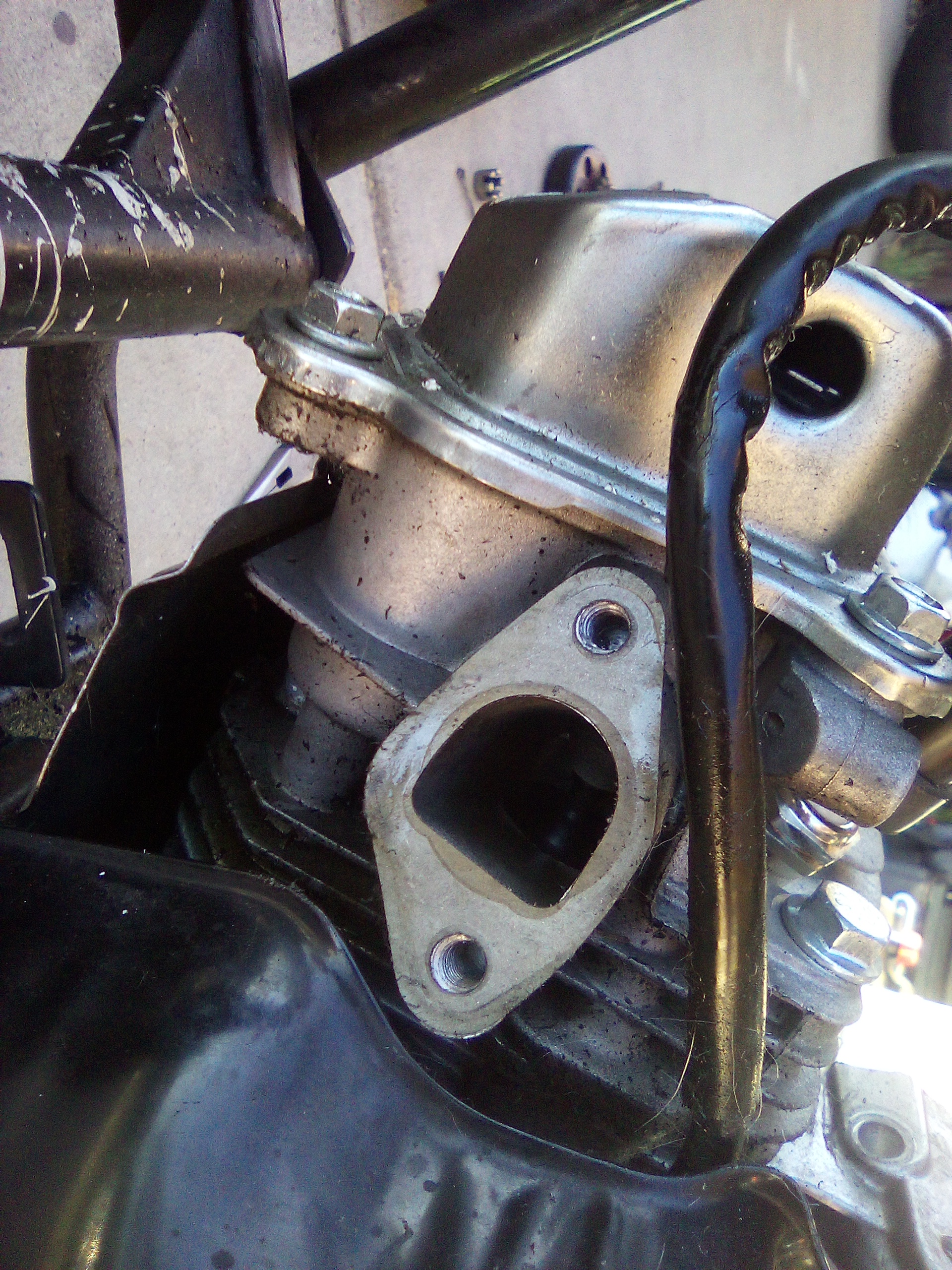
now